
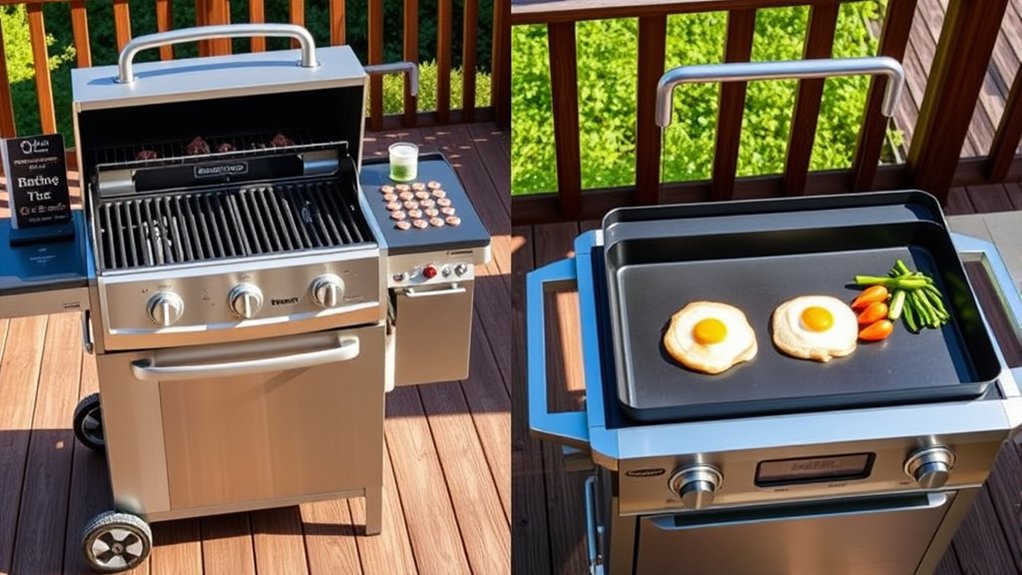
The Blackstone Omnivore and Griddle are both popular outdoor cooking options, but they cater to different needs.
The Blackstone Omnivore offers versatile cooking with interchangeable plates—grill grates, flat tops—and supports propane, natural gas, or charcoal fuels, letting you control multiple heat zones independently.
In contrast, the traditional Blackstone Griddle focuses on a single flat surface with uniform propane heat for consistent cooking, especially great for breakfast fare or stir-fries.
The Omnivore’s modularity adds complexity in cleaning and bulk, while the griddle excels at quick heat distribution and portability.
Understanding these nuances helps you pick the ideal model for your outdoor cooking needs.
Whether you want flexibility with fuels and cooking styles or a straightforward, efficient griddle, knowing the differences ensures the best choice.
Key Takeaways
- The Blackstone Omnivore offers interchangeable cooking surfaces including grill grates, while the griddle has a fixed flat-top surface optimized for flat cooking.
- Omnivore supports multiple fuel types (natural gas, propane, charcoal) with independent burners; the griddle primarily uses propane with a single heat source.
- The Omnivore’s modular design allows varied cooking styles, whereas the griddle provides consistent, even heat ideal for breakfast and stir-fry dishes.
- The griddle’s foldable legs enhance portability, while the Omnivore’s robust frame and handles add bulk but improve stability and transport.
- Cleaning the Omnivore requires disassembly of parts, whereas the griddle’s solid top simplifies grease removal and speeds up maintenance.
Blackstone Omnivore vs Griddle: Which One Is Right for You?
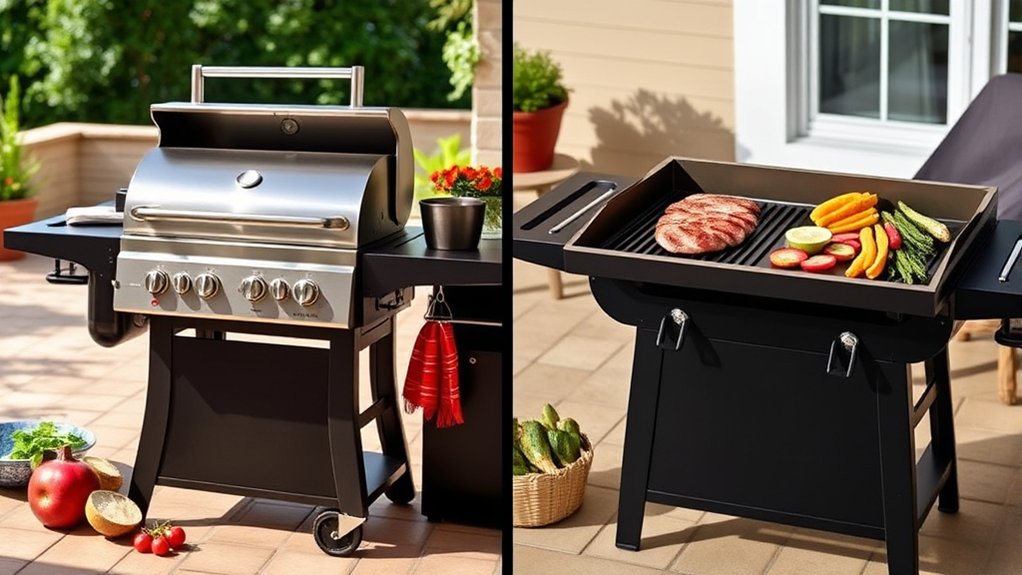
When deciding between the Blackstone Omnivore and a traditional griddle, you’ll want to contemplate how each appliance’s design and functionality align with your cooking needs. The Blackstone Omnivore offers omnivore versatility, combining a flat griddle surface with a grill grate and a side burner, allowing you to execute diverse cooking techniques simultaneously.
In contrast, a traditional griddle focuses exclusively on griddle performance, providing a uniform, flat cooking surface ideal for pancakes, eggs, or searing. If your meals require multitasking and varied heat zones, the Omnivore’s multi-functionality can enhance efficiency.
Conversely, if you prioritize consistent, even heat distribution for flat-top cooking, a traditional griddle may better suit your culinary style. Evaluating your cooking preferences and desired versatility will guide your choice effectively.
Key Features That Differentiate the Blackstone Omnivore and Griddle
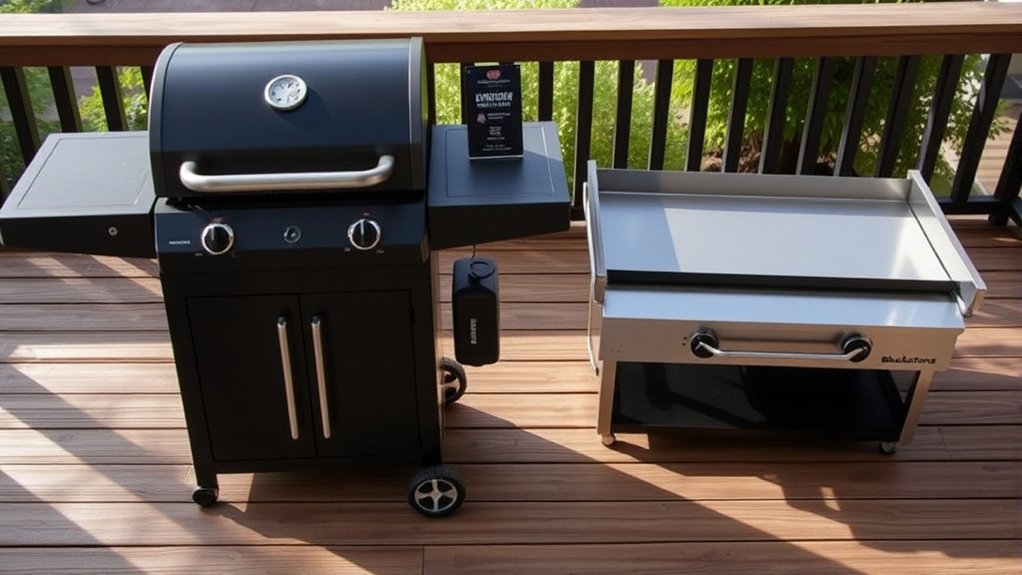
You’ll notice the Blackstone Omnivore offers multiple cooking surfaces, including a griddle and grill, while the Blackstone Griddle focuses solely on a flat-top design.
When it comes to portability, the Omnivore’s compact, folding legs make it easier to transport compared to the larger, more stationary Griddle. These design differences directly impact your cooking versatility and setup convenience.
Cooking Surface Options
Both the Blackstone Omnivore and Griddle offer distinct cooking surface options tailored to different culinary needs. The Omnivore features interchangeable cooking surface materials, including grill grates and a flat top griddle, allowing you to switch between direct flame grilling and flat cooking. This versatility requires you to manage multiple surfaces, each with unique cleaning and seasoning protocols for ideal cooking surface maintenance.
In contrast, the Blackstone Griddle provides a single, large cold-rolled steel cooking surface designed for even heat distribution and easy cleanup. While the Griddle’s surface demands regular seasoning to prevent rust and maintain non-stick properties, its uniform design simplifies maintenance compared to the Omnivore’s modular setup. Choosing between them hinges on your preference for varied cooking styles versus streamlined surface care.
Portability and Design
Although the Blackstone Omnivore and Griddle serve similar cooking purposes, their portability and design differ markedly to cater to varying user needs. The Omnivore features a modular design with interchangeable plates, emphasizing versatility but adding weight and bulk, which may reduce travel convenience.
Its robust frame and integrated handles aid transport but require more space. In contrast, the Blackstone Griddle offers streamlined design aesthetics with a fixed flat surface, making it lighter and more compact. Its foldable legs and detachable propane tank holder enhance portability, ideal for on-the-go cooking.
If you prioritize ease of transport and minimal setup, the Griddle’s design suits you better. However, for multifunctional cooking with moderate portability, the Omnivore’s modular construction stands out despite added bulk.
Comparing Cooking Surfaces: What to Expect
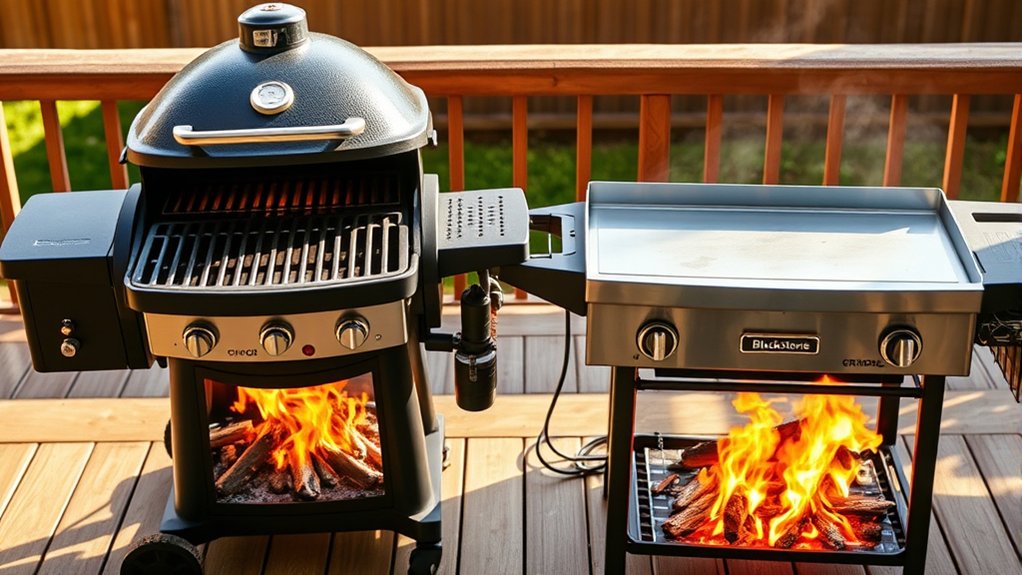
When comparing the cooking surfaces of the Blackstone Omnivore and traditional griddles, you’ll notice distinct differences that impact heat distribution, material durability, and maintenance requirements. The Omnivore features modular surface materials, including a cast iron grill, griddle plate, and wok ring, allowing versatile cooking techniques like searing, stir-frying, and flat-top cooking.
In contrast, traditional griddles typically offer a single flat steel cooking surface optimized for even heat spread and consistent temperature control. Blackstone’s cold-rolled steel surfaces provide excellent heat retention but demand regular seasoning to prevent rust, while the Omnivore’s interchangeable plates focus on durability and adaptability.
Depending on your preferred cooking techniques, whether direct grilling or flat-top frying, you’ll appreciate how each surface material influences performance, ease of cleaning, and overall culinary flexibility.
Fuel and Heat Control: Omnivore vs Griddle
You’ll find that the Blackstone Omnivore uses a versatile fuel system compared to the standard propane setup on the Griddle. Heat distribution efficiency varies as the Omnivore integrates multiple burners with independent controls, while the Griddle offers a single, uniform heat source.
Understanding these temperature control features will help you optimize cooking performance for different recipes.
Fuel Type Comparison
Since fuel type directly impacts heat control and cooking performance, understanding the differences between the Blackstone Omnivore and the traditional Blackstone Griddle is essential. The Omnivore offers charcoal versatility, allowing you to switch between natural gas, propane, and charcoal, which expands your cooking options. This adaptability means you can enjoy the smoky flavor of charcoal or the convenience of gas.
On the other hand, the traditional Blackstone Griddle is designed primarily for propane use, optimizing gas efficiency for consistent, controlled heat delivery. While the Griddle excels in rapid ignition and precise temperature adjustments, it lacks the Omnivore’s multi-fuel capability. Choosing between them depends on whether you prioritize fuel flexibility with the Omnivore or streamlined gas efficiency with the classic Griddle.
Heat Distribution Efficiency
Although both the Blackstone Omnivore and traditional Griddle deliver reliable heat control, their heat distribution efficiency varies due to their fuel systems and burner designs. The Omnivore’s tri-fuel capability influences its burner configuration, offering adaptable heat sources but slightly compromising uniform heat retention compared to the Griddle’s dedicated propane burners.
The Griddle’s cast iron or steel griddle plate excels in consistent heat distribution across its surface, promoting even cooking consistency. In contrast, the Omnivore’s design prioritizes versatility, which can create minor temperature variances on the cooking surface. If you value precise, uniform heat retention for consistent results, the Griddle edges out the Omnivore.
However, if you need flexibility in fuel use with acceptable heat distribution, the Omnivore remains a strong contender.
Temperature Control Features
While heat distribution impacts overall cooking performance, the way you control temperature directly affects your ability to manage cooking outcomes. The Blackstone Omnivore and Griddle differ significantly in fuel and heat control, influencing precision control and temperature settings.
- The Omnivore uses a sealed, multi-fuel design with adjustable heat zones, offering precise temperature control across its surface.
- The Griddle relies on propane burners with independent knobs, allowing you to set distinct temperature settings for each burner.
- Omnivore’s integrated heat management system maintains consistent temperatures, reducing fluctuations during cooking.
- Griddle’s simpler control setup provides straightforward adjustments but less fine-tuned precision compared to the Omnivore.
Choosing between them depends on whether you prioritize advanced temperature modulation or straightforward burner control.
Portability and Cleaning: Maintaining Your Blackstone Grills
When you’re choosing between the Blackstone Omnivore and Griddle, understanding their portability and cleaning requirements is essential for efficient maintenance. The Omnivore offers enhanced portability features such as detachable legs and a compact design, making it easier to transport compared to the bulkier Griddle.
However, the Griddle’s flat surface simplifies cleaning techniques. You can scrape off residue with a metal spatula and wipe it down with a damp cloth efficiently. Both models require seasoning after cleaning to maintain their non-stick surfaces, but the Omnivore’s modular parts demand more disassembly.
Additionally, the Griddle’s solid top allows quicker heat distribution, reducing burnt-on food and easing cleanup. Knowing these differences helps you maintain your Blackstone grill effectively, ensuring longevity and peak performance.
Which Blackstone Model Fits Your Cooking Style?
Understanding the portability and cleaning differences between the Blackstone Omnivore and Griddle sets the stage for identifying which model aligns with your cooking preferences. To match your cooking techniques and meal preferences, consider these factors:
- Versatility: Choose the Omnivore if you want interchangeable cooking surfaces for grilling, griddling, or searing.
- Surface Area: Opt for the Griddle for large, flat cooking space ideal for breakfast foods and stir-fries.
- Portability: The Omnivore’s compact design suits frequent transport and quick setup.
- Cleaning Ease: The Griddle’s smooth surface simplifies grease removal, fitting your maintenance style.
Analyze how your typical meals and preferred cooking styles align with these points to select the model that optimizes your outdoor cooking experience.
Frequently Asked Questions
Can the Blackstone Omnivore Be Used Indoors Safely?
You shouldn’t use the Blackstone Omnivore indoors due to indoor safety risks like carbon monoxide buildup. Its design suits outdoor cooking, so your cooking preferences should prioritize outdoor use for safety and ideal performance.
What Accessories Are Compatible With Both the Omnivore and Griddle?
Think of compatible cookware and cooking utensils as the bridge connecting both the Blackstone Omnivore and Griddle. You’ll find flat spatulas, silicone brushes, and cast iron pans work equally well on both for precise, versatile cooking.
How Long Does It Take for Each to Preheat?
You’ll find the Blackstone Griddle’s preheating time shorter, boosting cooking efficiency for quick meals. The Omnivore takes slightly longer due to versatile burners, but both deliver consistent heat once preheated, optimizing your cooking experience.
Are There Warranty Differences Between the Omnivore and Griddle?
You’ll find the warranty coverage similar, but the warranty duration differs slightly. The Omnivore typically offers a longer warranty duration than the Griddle, ensuring enhanced protection for your investment over time.
Can I Use Propane Tanks of Different Sizes With Either Model?
When it comes to propane compatibility, neither the Omnivore nor Griddle puts all their eggs in one basket. You can use various tank sizes with both models as long as you have the correct regulator and hose fittings installed properly.
Conclusion
Choosing between the Blackstone Omnivore and Griddle comes down to your cooking needs—and surprisingly, both offer versatile solutions that might overlap more than you expect. While the Omnivore excels with its multi-fuel options and grill versatility, the Griddle shines in surface area and consistent heat distribution.
Coincidentally, your ideal pick will balance portability, cleaning ease, and cooking style, proving that sometimes the best choice is exactly where these features intersect.
Ultimately, understanding the difference between the Blackstone Omnivore and Griddle will help you select the perfect cooking companion for your outdoor culinary adventures.

Leave a Reply