
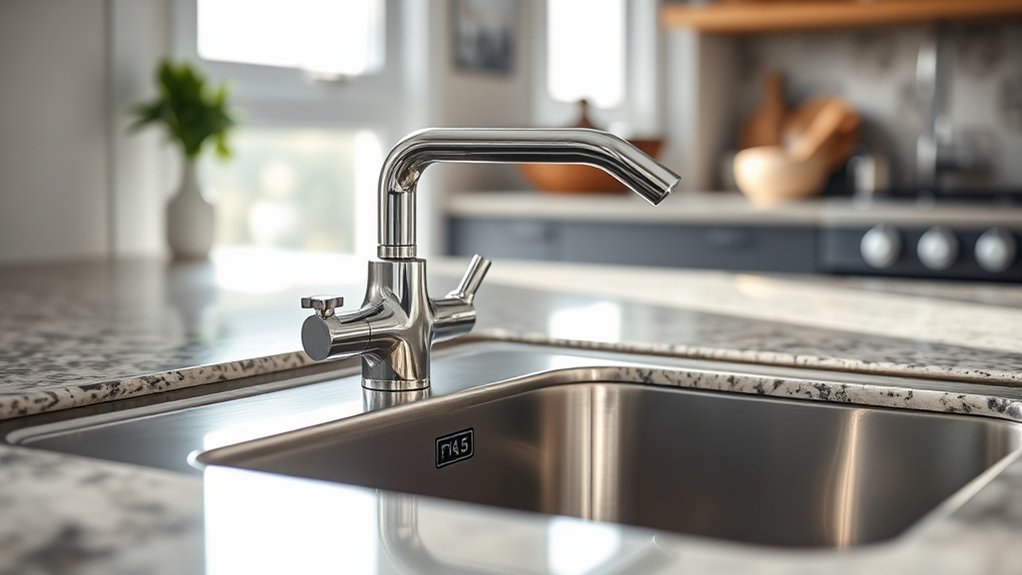
Yes, you can install a faucet without a sprayer by choosing a single-hole or wall-mounted faucet designed for this purpose. This option is ideal if you prefer a simpler setup or if your sink doesn’t have an extra hole for a sprayer.
First, turn off your water supply and verify that your sink’s hole configuration aligns with the new faucet. Use plumber’s tape on threaded connections to prevent leaks, and tighten mounting hardware securely.
Proper tools, such as a basin wrench, will help you work in tight spaces. Following these steps ensures a leak-free, functional faucet installation.
More detailed guidance can assist you through the entire process.
Key Takeaways
- Yes, you can install a kitchen faucet without a sprayer by choosing a single-hole or wall-mounted faucet designed for no sprayer use.
- Measure existing sink holes to ensure compatibility or plan to cover unused holes with plugs before installation.
- Turn off water supply and gather tools like adjustable wrench, basin wrench, and plumber’s tape for a smooth installation.
- Secure water supply lines to faucet inlets using plumber’s tape to prevent leaks and ensure proper connections.
- Test all connections carefully for leaks before finalizing installation to avoid water damage or functional issues.
Can You Install a Kitchen Faucet Without a Sprayer?
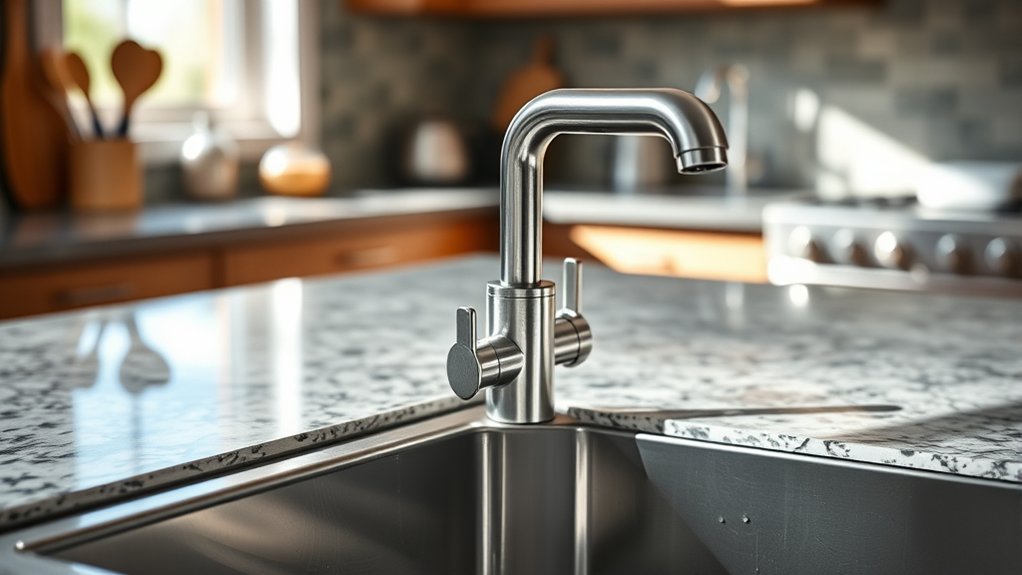
How straightforward is it to install a kitchen faucet without a sprayer? Quite manageable, especially when you select the right faucet styles designed for single-function use. You’ll want to focus on models that don’t require additional connections for a sprayer hose.
Before starting, gather essential installation tips: turn off the water supply, clear the work area, and organize your tools. Check that the mounting holes in your sink or countertop align with your faucet’s base to avoid modifications.
Use plumber’s tape on threaded connections to prevent leaks. Tighten fittings securely but avoid over-tightening to protect components. By following these technical steps precisely, you’ll guarantee a clean, efficient installation without the complexity sprayers add.
This approach suits straightforward kitchen setups and simplifies maintenance.
Which Faucet Types Work Without a Sprayer?
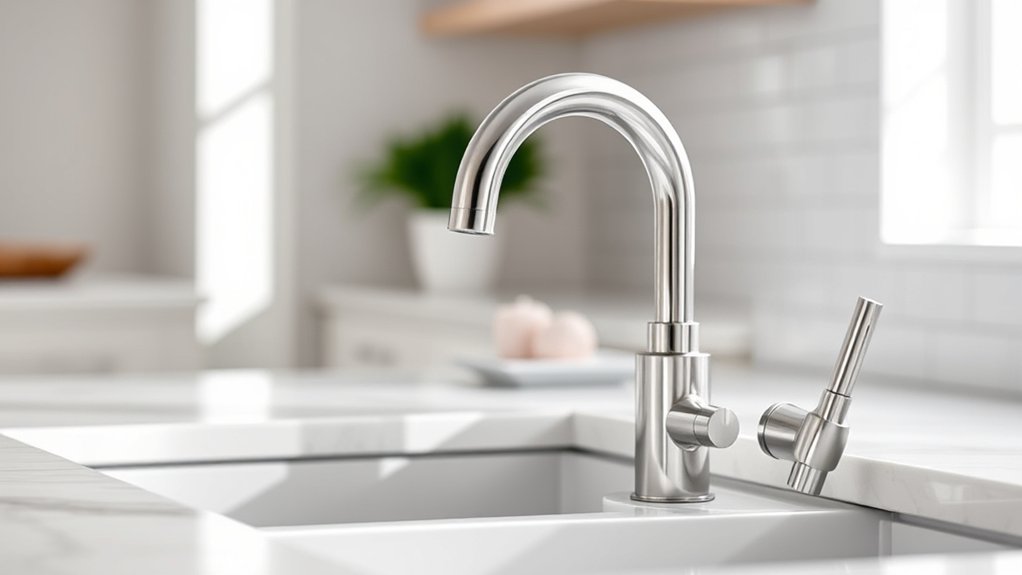
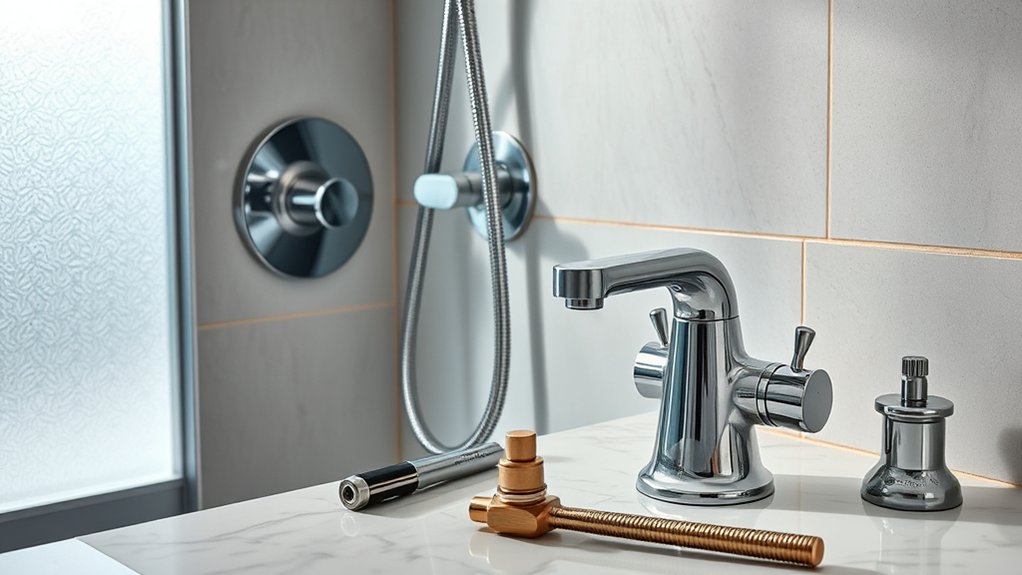
You can easily install faucets without sprayers if you choose single-hole or wall-mounted models. Single-hole faucets consolidate controls and spout, eliminating the need for extra holes for a sprayer.
Wall-mounted faucets also work well without sprayers since they’re installed directly on the wall, providing a streamlined setup.
Single-Hole Faucets
Single-hole faucets offer a streamlined design that simplifies installation and maintenance, especially when you don’t need a sprayer attachment. These faucets mount through a single hole in your sink or countertop, reducing the complexity often associated with multiple-hole setups.
The single hole benefits include fewer components and less potential for leaks, which translates to faster and more straightforward installations. You won’t need additional plumbing for a sprayer, cutting down both time and cost.
Their compact design also makes them ideal for smaller sinks or minimalist kitchens. When selecting a faucet without a sprayer, single-hole models provide practical functionality without sacrificing style or performance.
Wall-Mounted Faucets
Although wall-mounted faucets often accommodate sprayers, many models function efficiently without them, making them suitable for streamlined installations. When choosing a wall-mounted faucet without a sprayer, you benefit from wall mounted advantages such as increased countertop space and easier cleaning.
However, you must consider wall mounted considerations carefully, including plumbing accessibility and precise mounting height to guarantee ergonomic use. Since these faucets are installed directly on the wall, you’ll need to verify that your existing plumbing supports the configuration without requiring extensive modifications.
Also, keep in mind that without a sprayer, the faucet’s reach and flexibility depend solely on spout design. By selecting a wall-mounted faucet built for single-function use, you can achieve a clean, minimalist look without sacrificing performance or convenience.
Preparing Your Sink for a Sprayer-Free Faucet Installation
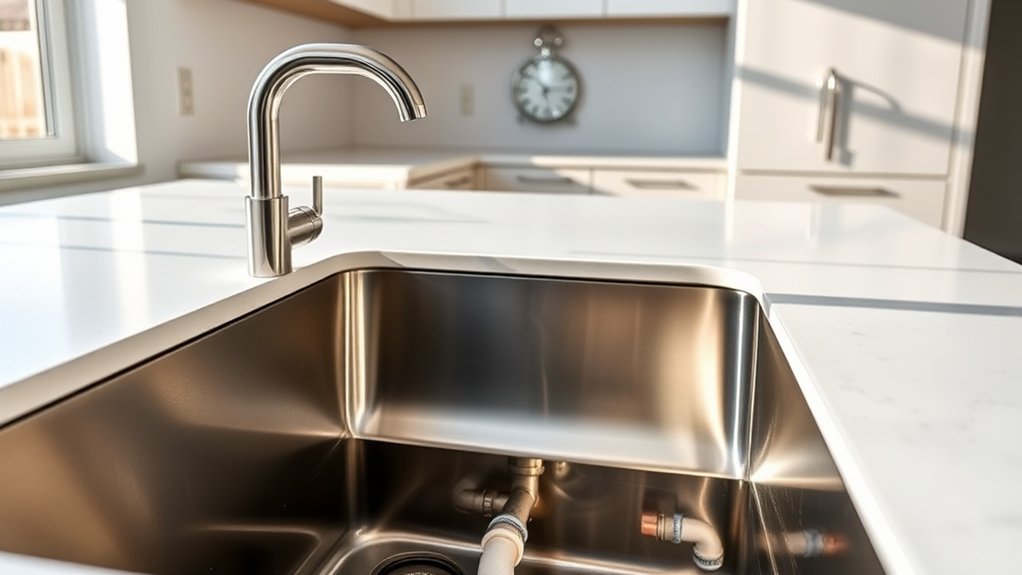
Before installing a faucet without a sprayer, make sure your sink’s existing holes align with the new fixture’s requirements. Begin your faucet preparation by measuring the diameter and spacing of the current holes to confirm compatibility.
If the sink has extra holes meant for a sprayer, you’ll need to decide whether to cover them with hole plugs or perform sink modifications. For sinks with incompatible hole layouts, drilling new holes or using an adapter plate may be necessary.
Verify the sink surface is clean and flat to allow a secure seal for the faucet base, preventing leaks. Proper sink modifications streamline installation and guarantee a stable, sprayer-free faucet setup that functions efficiently without compromising your sink’s integrity.
Step-by-Step Installation Guide for Faucets Without Sprayers
First, gather all necessary tools like a basin wrench, plumber’s tape, and adjustable wrench to guarantee a smooth installation.
Next, position the faucet components according to the manufacturer’s instructions, aligning mounting hardware precisely.
Finally, connect the water supply lines securely to prevent leaks and confirm all fittings are tight before testing the faucet.
Preparing Installation Tools
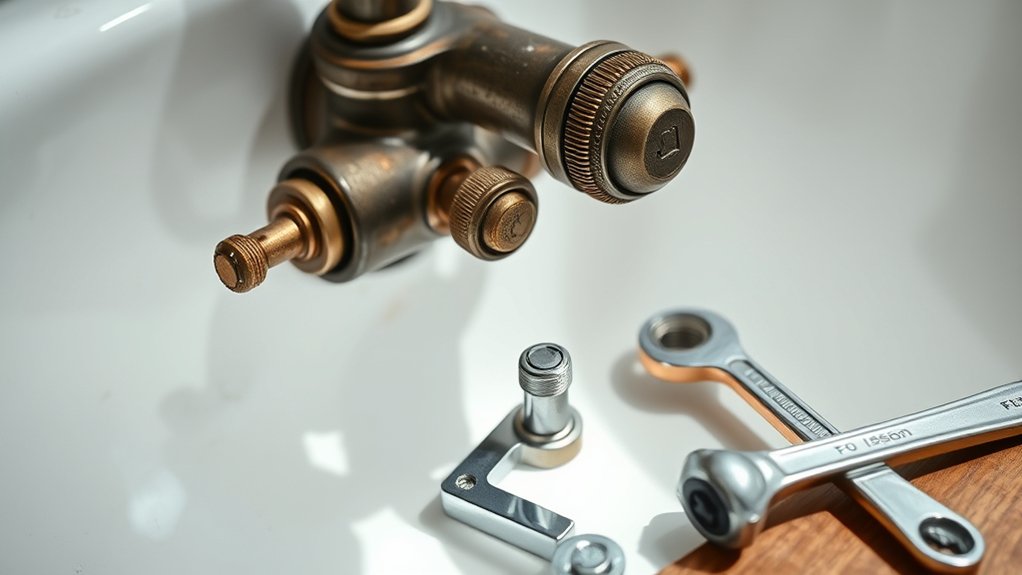
Gathering five essential tools will streamline your faucet installation without a sprayer. For efficient faucet installation, you’ll need an adjustable wrench, basin wrench, plumber’s tape, screwdriver, and a bucket.
The adjustable wrench handles tightening nuts, while the basin wrench accesses hard-to-reach mounting nuts under the sink. Plumber’s tape guarantees leak-proof threaded connections. A screwdriver helps secure mounting plates or brackets. The bucket collects residual water during disconnection.
Before starting, inspect each tool for damage and verify they’re clean to avoid complications. Having these necessary tools ready prevents delays and enables a smooth installation process.
Proper preparation means you can focus on precise assembly without scrambling for equipment, making your faucet installation straightforward and professional.
Connecting Faucet Components
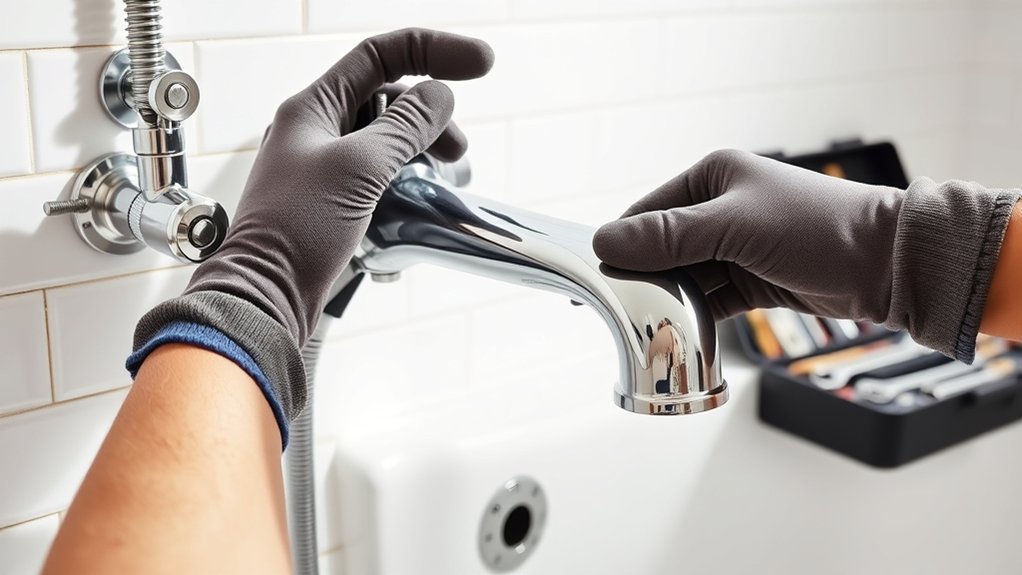
Three key connections must be securely fastened when installing a faucet without a sprayer: the water supply lines, the mounting hardware, and the drain assembly. Properly connecting these faucet components guarantees leak-free operation and stability.
- Attach the water supply lines to the faucet’s inlet ports, tightening with an adjustable wrench while avoiding over-tightening to prevent damage.
- Secure the mounting hardware beneath the sink by aligning the faucet base with the sink holes, then tightening the mounting nuts evenly to stabilize the faucet.
- Connect the drain assembly by inserting the drain flange into the sink drain hole, applying plumber’s putty, and tightening the locknut from below.
Using these installation techniques, you’ll achieve a secure and functional faucet setup without a sprayer.
Common Installation Challenges and How to Solve Them
Although installing a faucet without a sprayer simplifies some steps, you’ll still face common challenges such as limited space under the sink, securing proper water line connections, and guaranteeing a watertight seal.
To overcome these, follow key installation tips: use a basin wrench for tight spaces, double-check that supply lines match faucet inlets, and apply plumber’s tape on threaded connections to prevent leaks. Avoid common mistakes like overtightening connections, which can crack fittings, or neglecting to clean mounting surfaces before sealing.
Also, test all connections before finalizing installation to catch leaks early. By addressing these challenges methodically, you’ll guarantee a reliable, durable faucet setup without the complexities a sprayer adds, making your installation efficient and leak-free.
Benefits of Installing a Faucet Without a Sprayer
Mastering common installation challenges lays a strong foundation for understanding why choosing a faucet without a sprayer can be advantageous. When you focus on a simpler faucet design, you minimize complexity, reducing potential maintenance issues.
This aligns well with user preferences for straightforward, reliable fixtures. Here are three key benefits:
- Streamlined Installation: Fewer components mean quicker, less complicated setups.
- Enhanced Durability: Without a sprayer hose, you reduce wear points susceptible to leaks or breaks.
- Cost Efficiency: Faucets without sprayers typically cost less upfront and save on potential repair expenses.
Frequently Asked Questions
How Do I Maintain a Faucet Without a Sprayer?
You maintain a faucet without a sprayer by following faucet care and maintenance tips: regularly clean aerators, check for leaks, tighten fittings, lubricate valves, and replace worn-out seals to guarantee peak performance and longevity.
Are Faucets Without Sprayers More Water-Efficient?
Like a well-tuned engine, faucets without sprayers enhance water conservation by minimizing flow complexity. Their streamlined faucet design reduces unnecessary water use, making them more efficient and practical for precise water management in your daily routine.
Can I Add a Sprayer Later to a Faucet Without One?
You can add a sprayer later if your faucet compatibility supports it. Check for an extra hole or adapter options.
Review sprayer options matching your faucet’s design and installation requirements before purchasing.
What Tools Are Needed to Remove an Old Faucet?
You’ll need faucet removal tools like an adjustable wrench, basin wrench, and pliers.
Don’t forget plumbing safety tips: always turn off the water supply and wear gloves to protect your hands during the removal process.
Do Faucets Without Sprayers Come With Warranties?
Every cloud has a silver lining: faucets without sprayers usually come with warranty coverage focusing on faucet durability. You’ll find most manufacturers provide precise terms ensuring practical protection against defects, extending your faucet’s functional lifespan.
Conclusion
Installing a faucet without a sprayer can simplify your kitchen setup and reduce potential maintenance headaches. By choosing the right faucet type and preparing your sink carefully, you avoid unnecessary complications while maintaining full functionality.
Though you might miss the extra flair of a sprayer, this streamlined approach often leads to a cleaner look and easier upkeep. With precise steps and a bit of patience, you’ll enjoy a practical, efficient faucet that meets your everyday needs gracefully.
In conclusion, yes, you can install a faucet without sprayer, achieving a straightforward and effective kitchen fixture.

Leave a Reply