
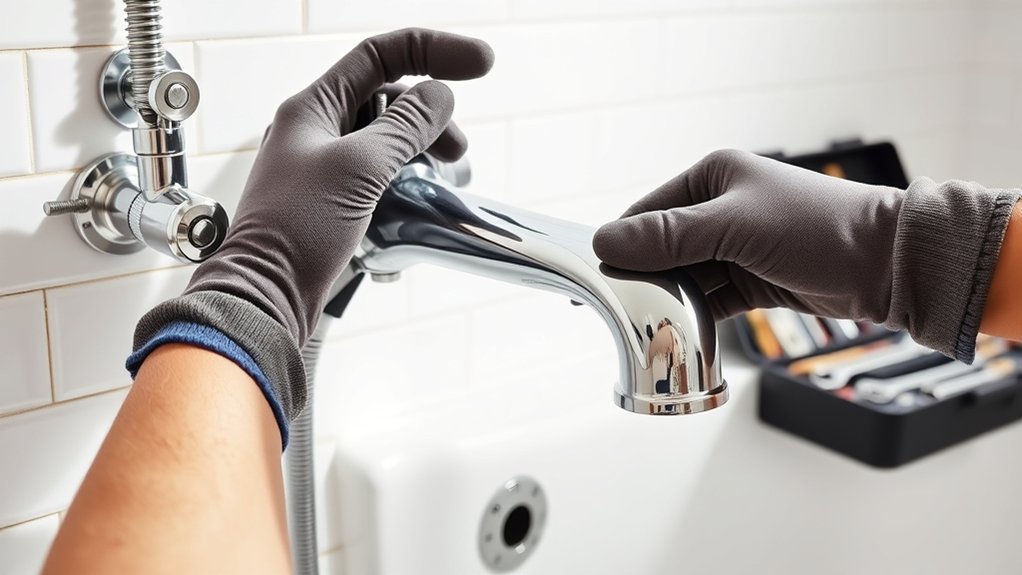
Yes, you can replace a bathtub faucet yourself if you have some basic tools like an adjustable wrench, screwdriver, and plumber’s tape.
Replacing a bathtub faucet is a manageable DIY project that can save you money on professional plumbing services.
First, shut off the water supply to avoid leaks.
Removing the old faucet involves identifying its type and carefully loosening fasteners.
When installing the new faucet, ensure proper alignment, apply sealing tape, and tighten connections securely to prevent leaks.
Keep an eye out for common issues like dripping or uneven flow as you proceed.
For detailed guidance and troubleshooting tips, explore the next steps.
Key Takeaways
- Yes, you can replace a bathtub faucet yourself with basic plumbing tools and clear instructions.
- Always shut off the water supply before removing the old faucet to prevent leaks.
- Use plumber’s tape on threaded connections to ensure a watertight seal during installation.
- Match the new faucet type and size to your existing plumbing for a proper fit.
- Inspect for leaks and functionality after installation to troubleshoot any issues promptly.
Can You Replace Your Bathtub Faucet Yourself?
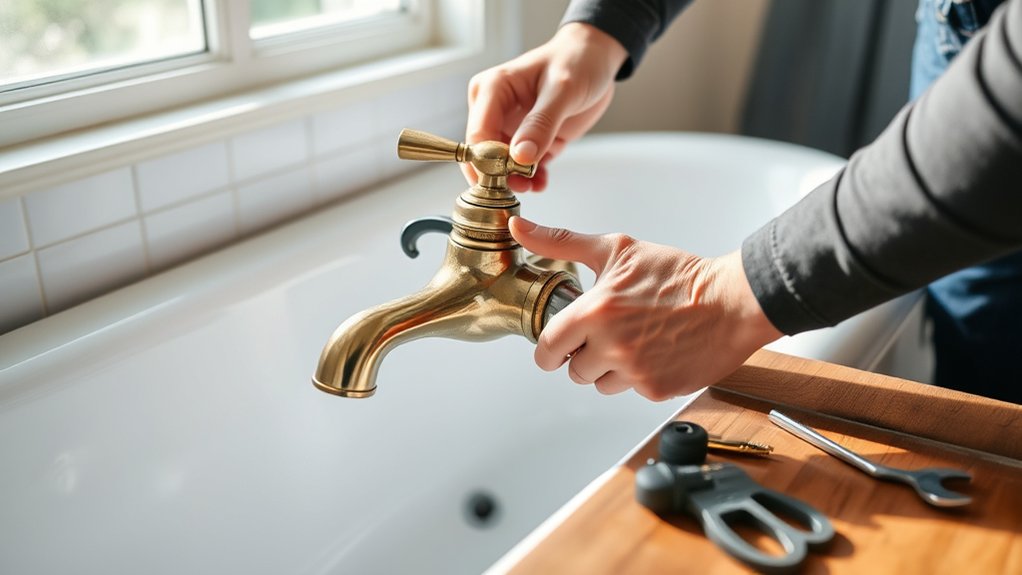
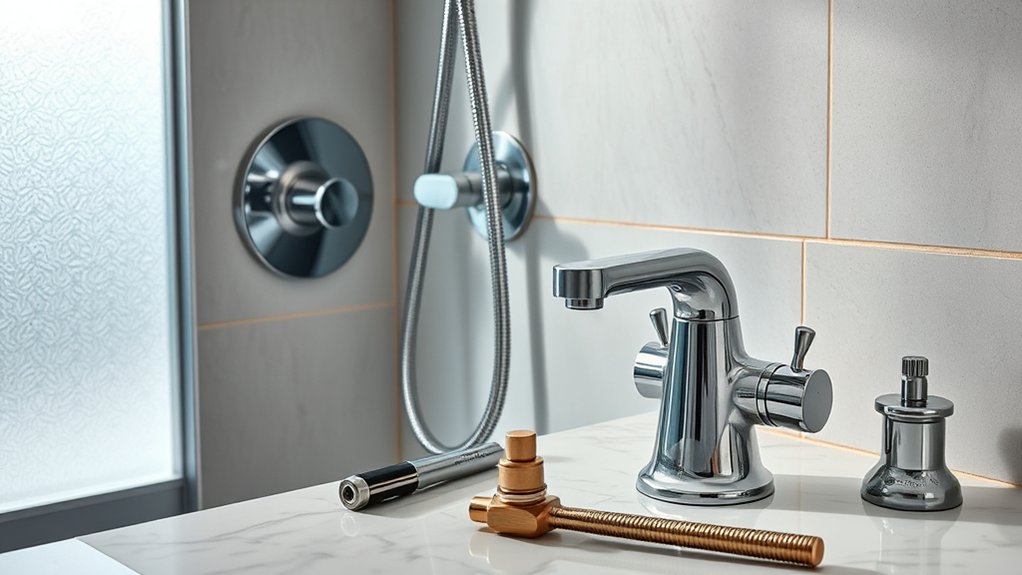
Although replacing a bathtub faucet may seem intimidating, you can handle it yourself with the right tools and instructions. Understanding different faucet types, such as single-handle, double-handle, and wall-mounted models, is essential before starting.
Each faucet type requires specific installation tips to guarantee a proper fit and leak-free operation. You’ll need to shut off your water supply, remove the old faucet carefully, and prepare the connections for the new fixture.
Pay close attention to the alignment and sealing components, like washers and O-rings, to prevent water damage. Following manufacturer guidelines precisely, especially regarding torque specifications and sealing methods, will help you achieve a professional-quality replacement without calling a plumber.
With patience and accuracy, you’ll complete the project efficiently and confidently.
Tools and Materials You’ll Need for the Job
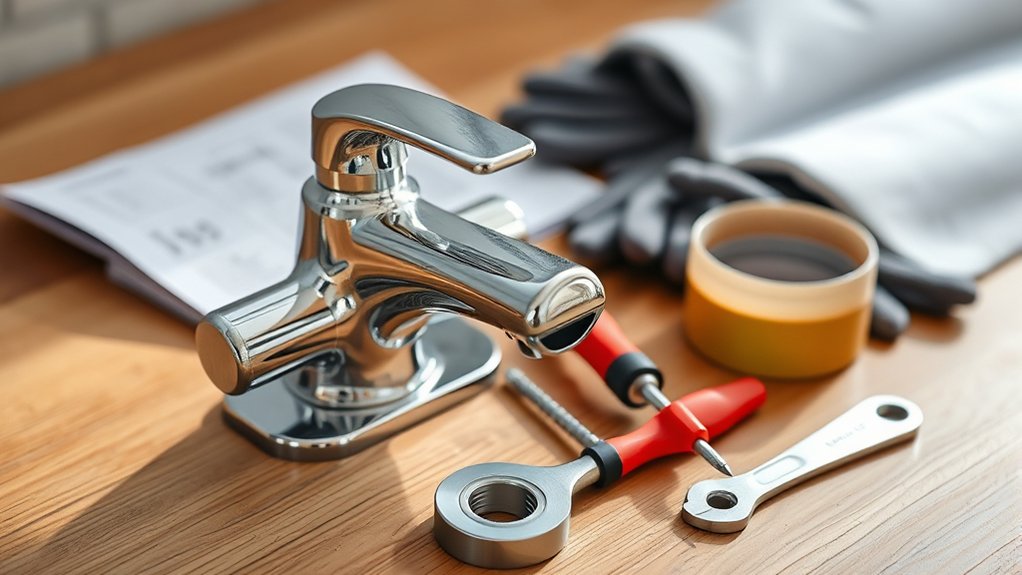
Successful faucet replacement depends on having the right tools and materials on hand before you begin. Start by selecting the appropriate faucet type, such as single-handle, dual-handle, or thermostatic, compatible with your existing plumbing.
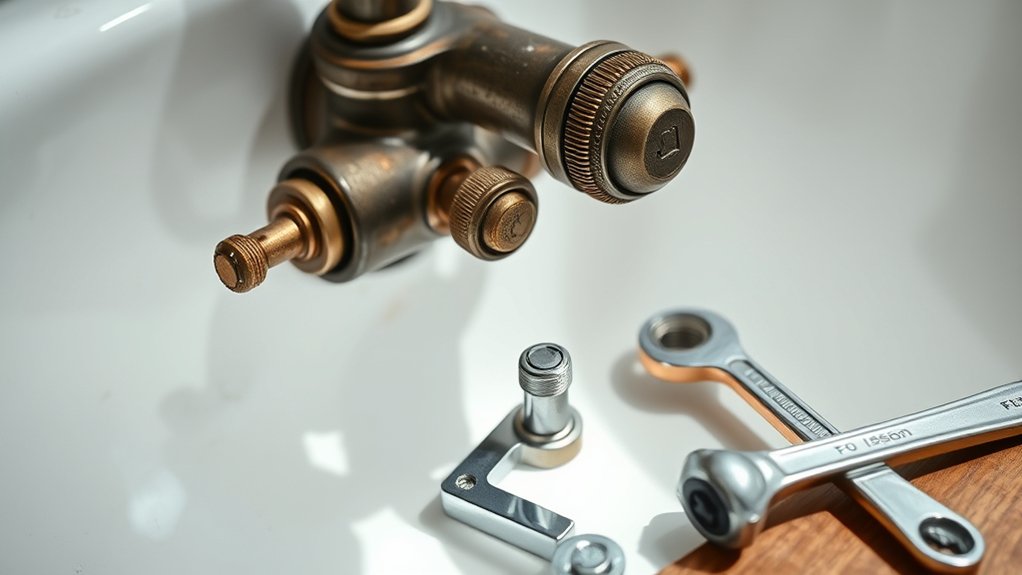
Essential tools include an adjustable wrench, screwdriver set, plumber’s tape, and a basin wrench for tight spaces. You’ll also need a bucket to catch residual water and a cloth to clean the area.
For materials, have replacement washers, O-rings, and sealant ready. Keep installation tips in mind: verify all parts match manufacturer specifications, and ascertain you have adequate clearance for the new faucet.
Preparing these tools and materials upfront streamlines the process, reduces errors, and guarantees a smooth, professional-quality faucet replacement.
How to Remove Your Old Bathtub Faucet
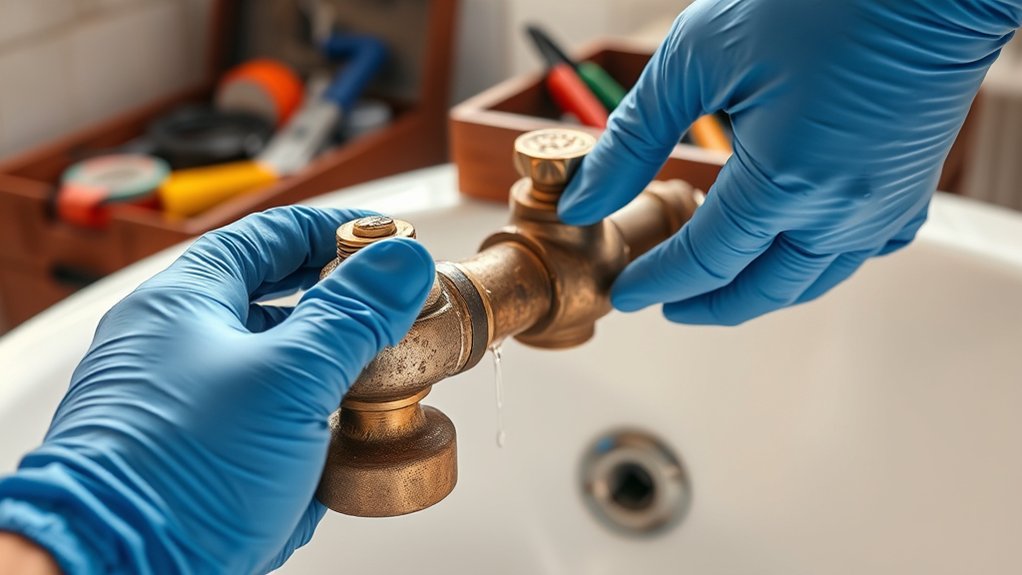
Begin by turning off the water supply to the bathtub to prevent leaks during removal. Next, identify your faucet type, whether it’s a single-handle, double-handle, or wall-mounted, since removal techniques vary accordingly. Use the right tools, such as an adjustable wrench or screwdriver, matching your faucet’s fasteners. Carefully loosen and remove the faucet components, avoiding damage to plumbing connections.
Key steps include:
- Removing decorative caps to access screws
- Unscrewing handles or knobs
- Detaching the spout by loosening set screws or unscrewing threaded connections
- Using penetrating oil on stuck parts
- Inspecting and cleaning the area after removal
Following these removal techniques guarantees a smooth process and prepares you for installing the new faucet.
How to Install a New Bathtub Faucet
Start by verifying all plumbing connections and surfaces are clean and free of old sealant or debris. Identify the correct bathtub faucet type for your plumbing system, whether wall-mounted or deck-mounted.
Apply plumber’s tape to threaded connections to prevent leaks. Align the new faucet’s inlet with the water supply and tighten fittings securely but avoid overtightening to prevent damage.
For single-handle or dual-handle faucet installations, follow manufacturer instructions precisely, verifying valve stems and cartridges seat correctly. Use a level to confirm the faucet is straight before final tightening.
Seal around the faucet base with waterproof silicone to protect against water infiltration. Faucet installation tips include verifying water pressure and testing for leaks after installation. Proper installation verifies durability and functionality, avoiding premature wear or water damage.
Troubleshooting Common Bathtub Faucet Replacement Problems
After installing your new bathtub faucet and sealing all connections, you might still encounter issues that affect performance or cause leaks. Effective leak detection is essential to guarantee your faucet functions correctly across various faucet styles. Here’s what to troubleshoot:
After installation, check for leaks and performance issues to ensure your bathtub faucet works flawlessly.
- Persistent dripping despite tight connections, indicating worn washers or cartridge issues
- Uneven water flow due to debris in the aerator or supply lines
- Leaks around the handle or spout caused by improper sealing or damaged O-rings
- Difficulty in turning handles, often from mineral buildup or misaligned parts
- Water temperature inconsistencies linked to faulty mixing valves
Address these problems by inspecting components systematically and replacing defective parts. Proper troubleshooting guarantees your bathtub faucet operates efficiently and prevents water damage.
When to Call a Professional for Faucet Replacement
How do you know when a faucet replacement requires professional expertise? If you encounter complex plumbing configurations or suspect hidden leaks, calling a professional is wise.
Professionals verify compliance with local plumbing codes, preventing potential legal and safety issues. Additionally, if your project involves modifying existing water lines or installing advanced features like thermostatic valves, a licensed plumber’s skills are necessary.
Consider cost considerations carefully; while DIY may save upfront expenses, improper installation can lead to costly water damage or code violations. If you lack specialized tools or experience handling shut-off valves and precise fittings, avoid risk.
Hiring a professional guarantees a secure, code-compliant installation, protecting your home and investment. When in doubt, prioritize safety and precision over convenience.
How to Maintain Your New Bathtub Faucet for Longevity
Although a new bathtub faucet functions efficiently upon installation, maintaining it regularly guarantees durability and prevents premature wear. To extend your faucet’s lifespan, adopt consistent faucet cleaning tips and leak prevention strategies.
Regular maintenance ensures your new bathtub faucet stays durable and prevents premature wear.
Start by wiping the faucet with a soft cloth and mild cleaner weekly to prevent mineral buildup. Check for drips or leaks monthly; even small leaks can cause damage over time.
Tighten loose handles promptly and replace worn-out washers or O-rings to avoid leaks. Additionally, flush the faucet aerator periodically to remove sediment.
Finally, avoid using harsh chemicals or abrasive tools that can damage the finish. Implementing these practical steps guarantees your bathtub faucet remains reliable and maintains peak performance for years.
- Weekly cleaning with mild agents
- Monthly leak inspections
- Tightening loose components
- Flushing aerators regularly
- Avoiding abrasive cleaners
Frequently Asked Questions
What Types of Bathtub Faucets Are Compatible With Standard Plumbing?
You’ll find standard plumbing compatible with various bathtub faucet types like single-handle, double-handle, and wall-mounted faucets. Verify matching pipe size and connection style to guarantee plumbing compatibility during replacement or installation.
Can I Change the Faucet Finish to Match Bathroom Decor?
You can change faucet finish options to complement bathroom color schemes, enhance style, and guarantee durability. Selecting finishes like brushed nickel or chrome allows you to match aesthetics precisely, maintain functionality, and update your bathroom efficiently.
How Do I Prevent Water Damage During Faucet Replacement?
You’ll prevent water damage by shutting off the water supply, using waterproofing techniques like sealing edges with silicone, and performing leak detection during installation.
Tighten connections precisely to avoid leaks and guarantee a durable faucet replacement.
Are There Eco-Friendly Bathtub Faucet Options Available?
Looking for eco-friendly bathtub faucet options? You’ll find models using sustainable materials and designed for energy efficiency, helping you save water and reduce impact.
Why not upgrade to a faucet that’s both practical and green?
What Is the Average Cost of a New Bathtub Faucet?
You can expect faucet installation costs to range from $150 to $400, depending on complexity. Replacement faucet brands like Moen, Delta, and Kohler offer reliable options within $50 to $200, balancing quality and price effectively.
Conclusion
Replacing your bathtub faucet yourself is like wielding a skilled artisan’s chisel—precise, deliberate, and rewarding. With the right tools and careful steps, you can transform your bathroom without calling in a professional.
Just remember, if leaks persist or complexities arise, don’t hesitate to seek expert help. Maintain your new faucet regularly to guarantee it remains as reliable as Da Vinci’s craftsmanship, blending function and form flawlessly for years to come.
If you are comfortable with basic plumbing tasks, you can replace a bathtub faucet yourself and enjoy the satisfaction of a job well done.

Leave a Reply