
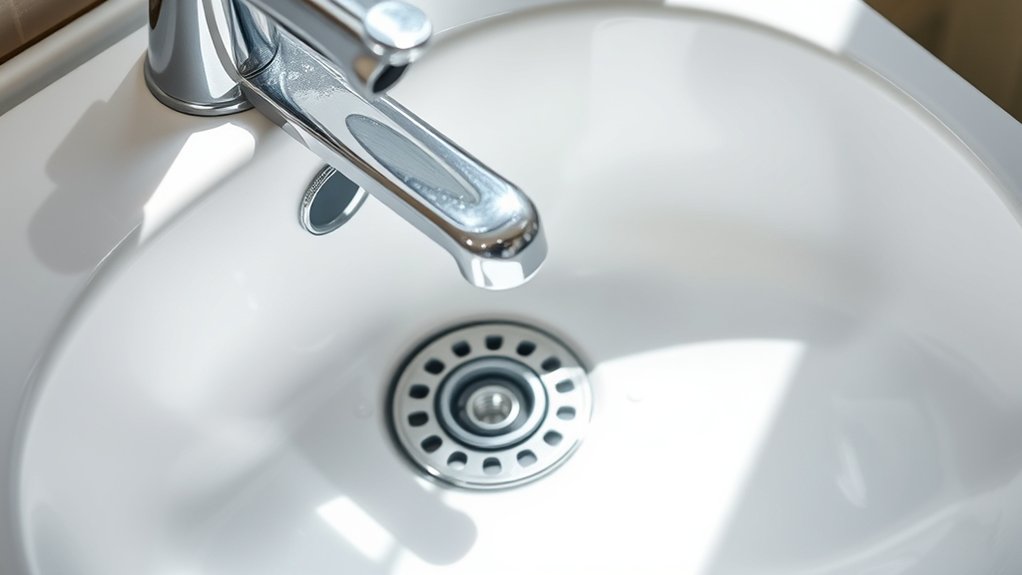
Yes, you can replace a bathroom faucet without replacing the drain, provided the drain is in good condition and compatible with the new faucet.
Before starting, carefully check the drain linkage, gaskets, and alignment to avoid any leaks.
Inspect the drain for signs of corrosion or damage. Use plumber’s tape on threaded connections to ensure a secure seal and prevent water leakage.
With proper preparation, this can be a straightforward task.
However, to avoid common pitfalls and guarantee a smooth installation, there are additional factors to consider.
Key Takeaways
- You can replace a bathroom faucet without changing the drain if the existing drain is functional and compatible.
- Verify the new faucet’s design matches the sink’s hole configuration to avoid drain alignment issues.
- Inspect the drain for leaks, corrosion, or damage before deciding not to replace it.
- Ensure drain linkage and stopper align properly with the new faucet’s controls to maintain proper function.
- Replace worn gaskets and clean drain components to prevent leaks without needing a full drain replacement.
Can You Replace Your Bathroom Faucet Without Changing the Drain?
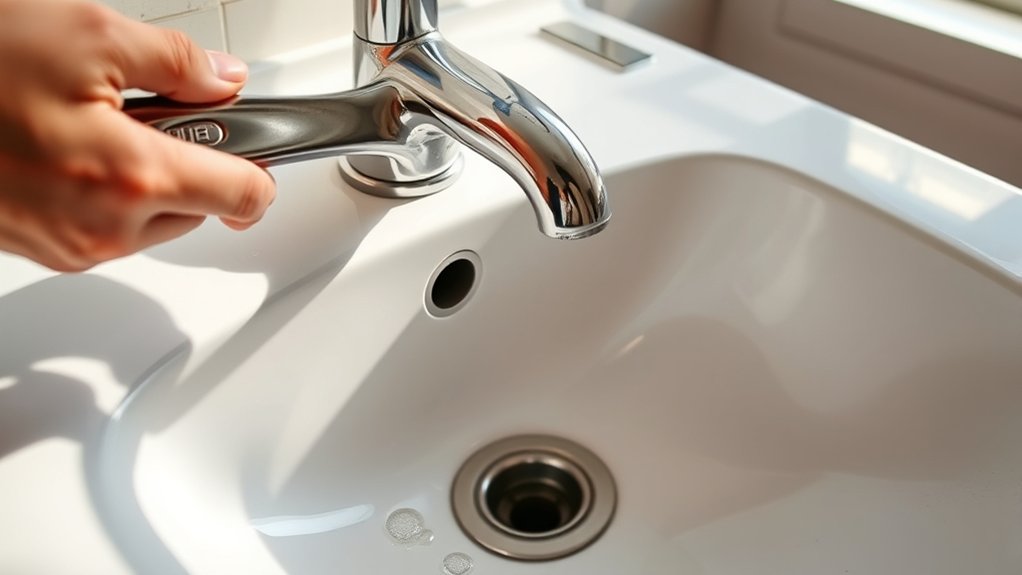
Although the faucet and drain are part of the same sink assembly, you can replace your bathroom faucet without changing the drain as long as the drain remains functional and compatible with the new faucet. Before proceeding, check faucet compatibility by ensuring the new faucet’s configuration matches your sink’s hole pattern and drain design.
Plumbing considerations include verifying that the drain’s linkage and stopper mechanism align with the new faucet’s controls, especially if it has a pop-up drain assembly. Also, inspect the drain for leaks or corrosion; if it’s in good condition, replacement isn’t necessary.
Focusing on these technical details helps avoid unnecessary work and expenses. You only need to replace the drain if it’s damaged or incompatible with the new faucet’s operational features.
Tools and Materials Needed to Replace a Bathroom Faucet
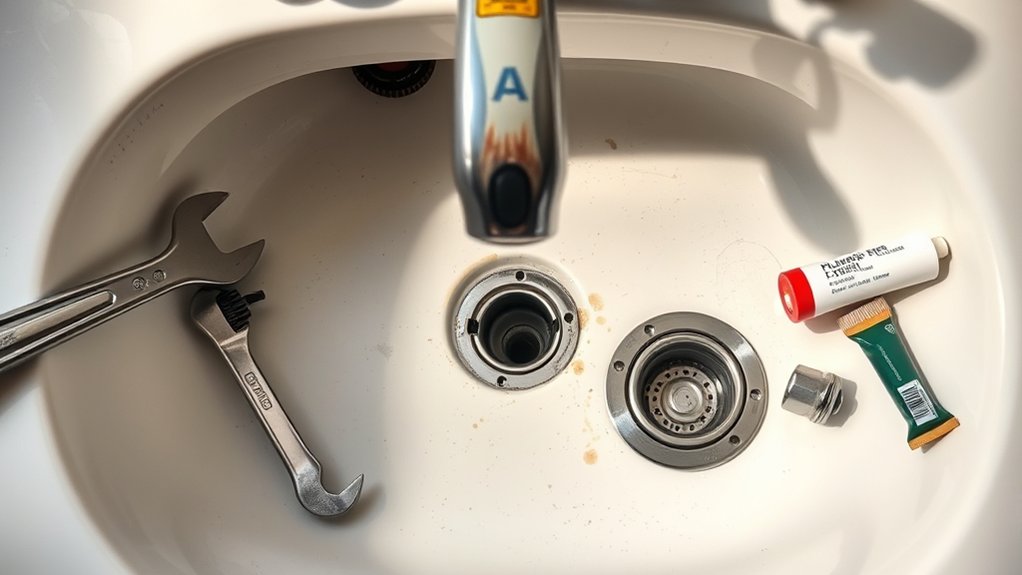
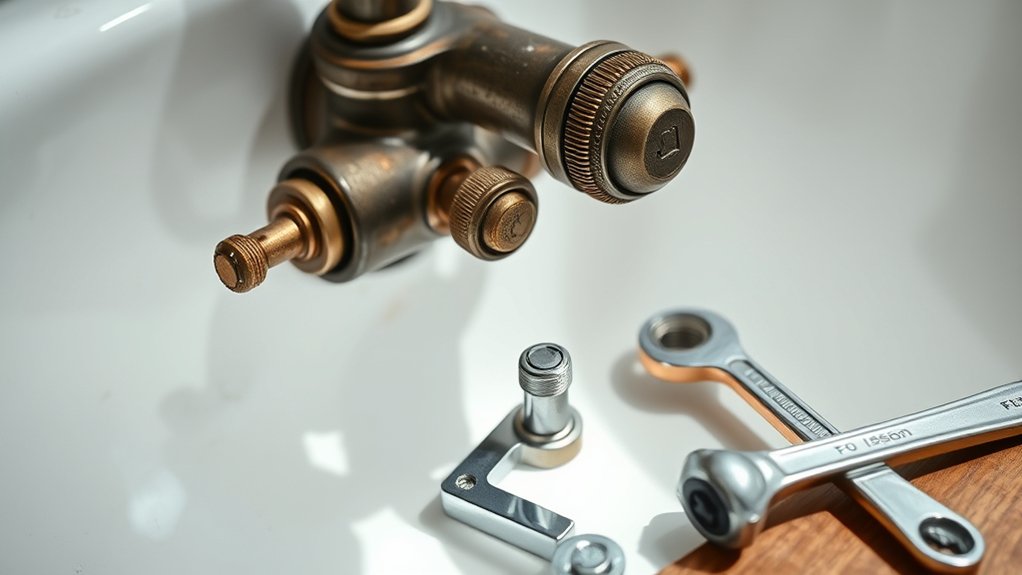
Before you begin replacing your bathroom faucet, gather all the necessary tools and materials to assure a smooth installation process. Different faucet types require specific parts, so check your model first. Use proper installation tips to avoid leaks and guarantee alignment.
Below is a handy checklist:
| Tool/Material | Purpose | Notes |
|---|---|---|
| Adjustable wrench | Loosening/tightening nuts | Essential for most faucets |
| Basin wrench | Accessing hard-to-reach nuts | Makes removal easier |
| Plumber’s tape | Sealing threaded connections | Prevents leaks |
| New faucet | Replacement part | Match faucet types |
| Bucket | Catching water | Keeps workspace dry |
Having these ready streamlines your work, helping you replace your faucet efficiently without tackling the drain if it’s compatible.
Step-by-Step Guide to Replacing a Bathroom Faucet
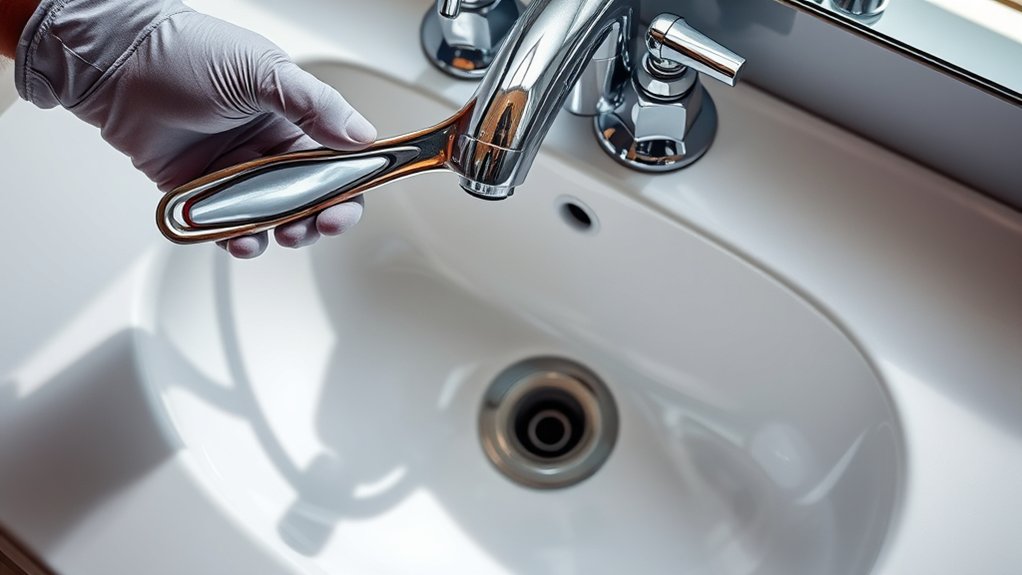
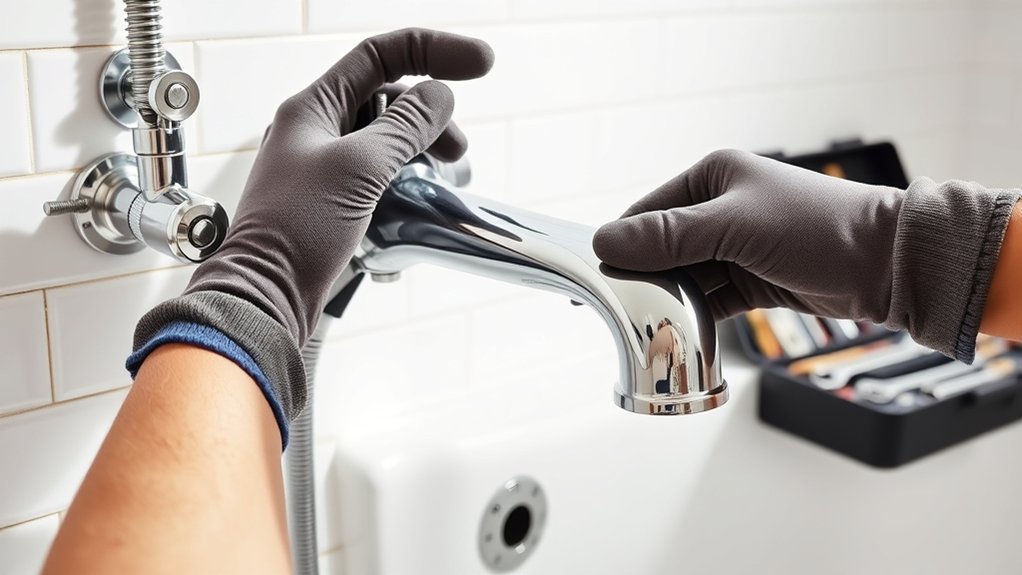
Once you’ve gathered all the necessary tools and materials, you can begin by shutting off the water supply to prevent leaks during the faucet removal and installation process. Start by disconnecting the supply lines and removing the old faucet carefully.
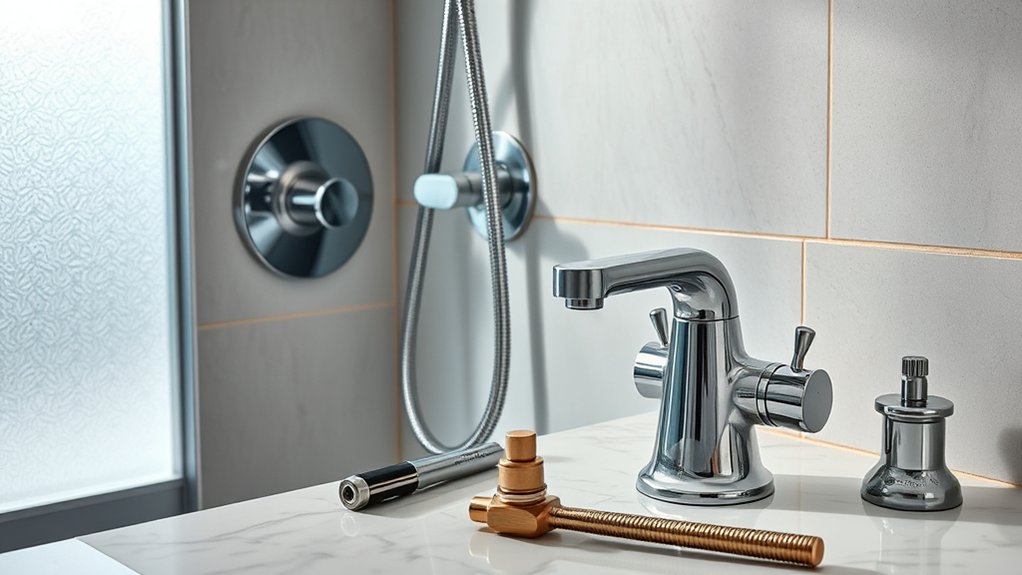
When selecting your new faucet, consider faucet types: single-hole, centerset, or widespread to guarantee compatibility with your sink. Position the new faucet on the sink, aligning mounting hardware beneath.
Tighten nuts securely to prevent leaks, but avoid over-tightening to protect components. Reconnect supply lines using plumber’s tape for a tight seal.
Turn on the water to check for leaks and proper function. Installation tips include working in a well-lit area and keeping a bucket handy for residual water.
Following these steps will streamline your faucet replacement efficiently.
Common Drain Problems When Changing Bathroom Faucets
Three common drain problems can arise when changing bathroom faucets, and being aware of them helps you avoid costly repairs. First, misaligned drain connections often cause leaks; guarantee the drain assembly aligns perfectly with the new faucet’s tailpiece.
Second, worn or damaged gaskets may no longer seal properly, so inspect and replace them during faucet replacement. Third, buildup or corrosion inside the drain can impede water flow, so perform thorough drain maintenance before installing the faucet.
Following these plumbing tips—checking seals, aligning parts precisely, and clearing obstructions—prevents common issues. By addressing these factors proactively, you guarantee your bathroom drain functions efficiently without needing full replacement, saving time and money while maintaining a leak-free system.
How to Avoid Leaks Without Replacing Your Bathroom Drain
Addressing issues like misaligned connections and worn gaskets sets the stage for preventing leaks without replacing your bathroom drain. Focus on proper drain maintenance and precise alignment during faucet replacement to guarantee leak prevention.
Regularly check seals and tighten fittings to avoid water seepage.
| Task | Action | Result |
|---|---|---|
| Inspect gasket | Replace if cracked or worn | Guarantees watertight seal |
| Align drain connections | Adjust and tighten fittings | Prevents misaligned leaks |
| Clean drain components | Remove debris and buildup | Maintains smooth water flow |
| Apply plumber’s tape | Wrap threaded joints | Enhances leak prevention |
| Test for leaks | Run water and observe | Confirms effective maintenance |
Frequently Asked Questions
How Long Does a Typical Bathroom Faucet Last Before Needing Replacement?
You can expect a typical bathroom faucet lifespan of 10-15 years. Faucet lifespan factors include water quality and usage frequency.
Watch for signs replacement needed, like leaks, corrosion, or reduced water flow, to guarantee proper function.
Can I Upgrade to a Water-Saving Faucet Without Changing Plumbing?
Yes, you can upgrade to a water-saving faucet without changing plumbing. Just make certain the new faucet matches your current plumbing compatibility to enjoy water-saving benefits without costly modifications or leaks.
What Are the Best Brands for Durable Bathroom Faucets?
You’ll find that faucet brands like Moen, Delta, and Kohler lead with durable materials, boasting over 70% fewer leaks than others. They combine solid construction and advanced finishes for longevity and reliable performance in your bathroom.
Is It Possible to Replace a Faucet by Myself or Should I Hire a Plumber?
You can handle DIY installation if you have basic plumbing tools and follow instructions carefully.
However, if you’re unfamiliar with plumbing or face complications, hiring a plumber guarantees proper, leak-free faucet replacement and saves time.
How Do I Clean and Maintain a Bathroom Faucet to Extend Its Life?
Imagine you wipe your faucet weekly with vinegar-soaked cloths. For proper faucet cleaning and maintenance, regularly remove mineral buildup, check for leaks, and tighten connections. These maintenance tips will extend your faucet’s life effectively.
Conclusion
So, yes—you can swap out that tired bathroom faucet without tossing your drain into the trash heap. Just grab your wrench, stay clear of leaks, and don’t treat your drain like it’s auditioning for a horror movie.
With the right steps, you’ll avoid plumbing drama and keep your sink happy. Remember, replacing a faucet isn’t rocket science—it’s plumbing 101 with a little elbow grease and common sense.
You’ve got this! And yes, you can replace a bathroom faucet without replacing the drain, making the process simpler and more cost-effective.

Leave a Reply