
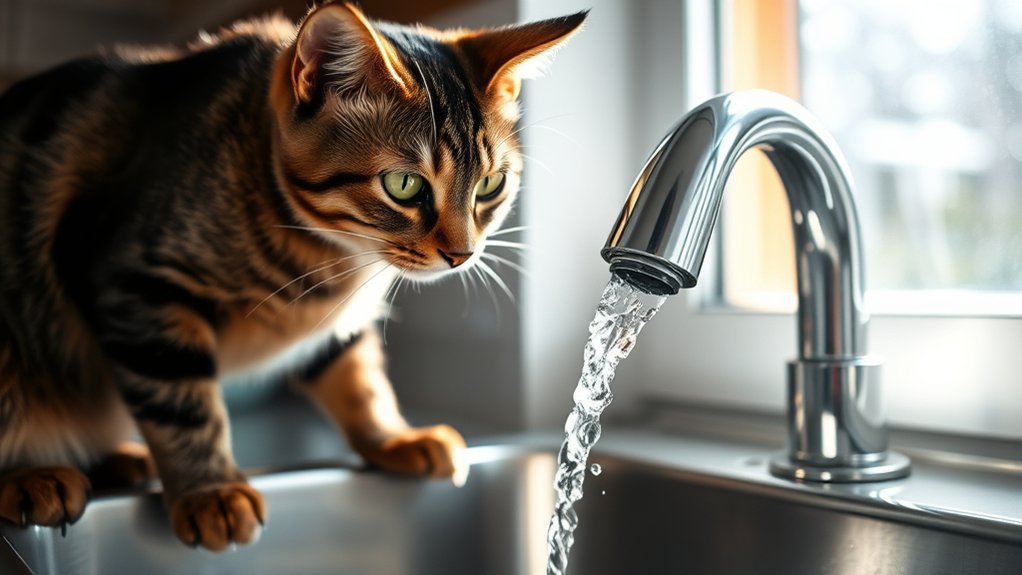
You can let your cat drink faucet water, but you should verify it’s safe and suitable first.
Check the water temperature—lukewarm or cool works best—and make sure your local tap water is free from harmful contaminants like chlorine, heavy metals, or bacteria.
Avoid water softened with salt-based systems, as high sodium levels can harm your cat.
Watching your cat’s hydration habits helps spot potential health issues early.
Keep reading to understand how faucet water impacts your cat’s health and learn about safer alternatives.
Key Takeaways
- Cats can drink faucet water if it is clean, at a lukewarm or cool temperature, and free from harmful contaminants.
- Running faucet water is often preferred by cats due to its freshness, cooler temperature, and stimulating movement.
- Tap water quality varies by location; verify local water safety reports and avoid water with high sodium from salt-based softeners.
- Contaminants like chlorine, heavy metals, and bacteria in faucet water can pose health risks, so filtration is recommended.
- Monitor your cat’s drinking behavior and consult a vet if you notice changes or signs of illness related to water intake.
Is Faucet Water Safe for Cats to Drink?
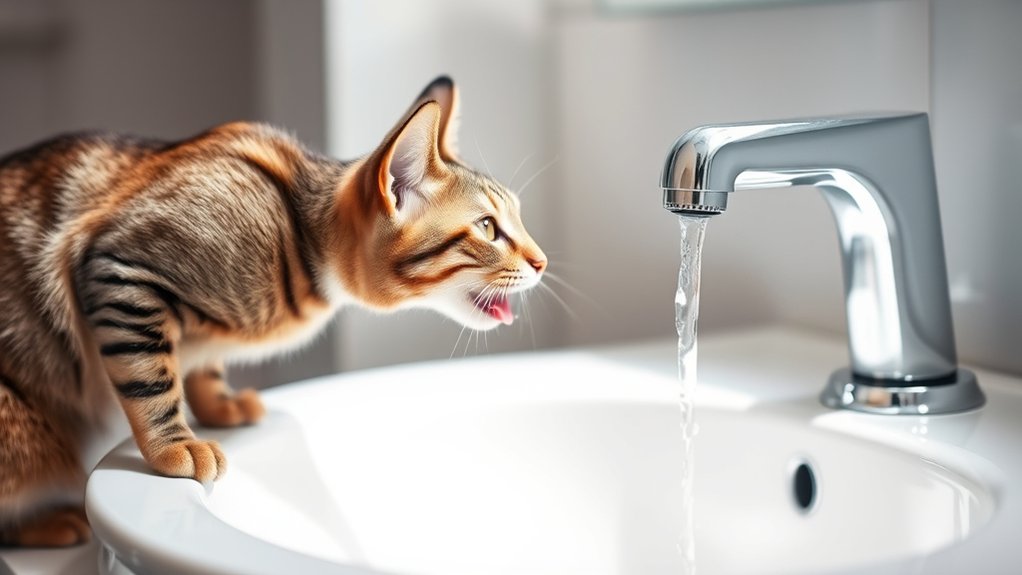
How safe is faucet water for your cat to drink? Generally, faucet water is safe for cats, but you should consider several factors to guarantee their health.
Faucet water temperature plays an essential role; lukewarm or cool water is preferable, as extremely cold or hot water may deter your cat or cause discomfort.
Observing your cat’s drinking behavior helps identify any adverse reactions or preferences, signaling potential issues with water quality or temperature.
Tap water quality varies by location, so it’s wise to verify local water safety reports. Avoid using water softened by salt-based systems, as high sodium levels can be harmful.
Why Do Cats Prefer Drinking Faucet Water?
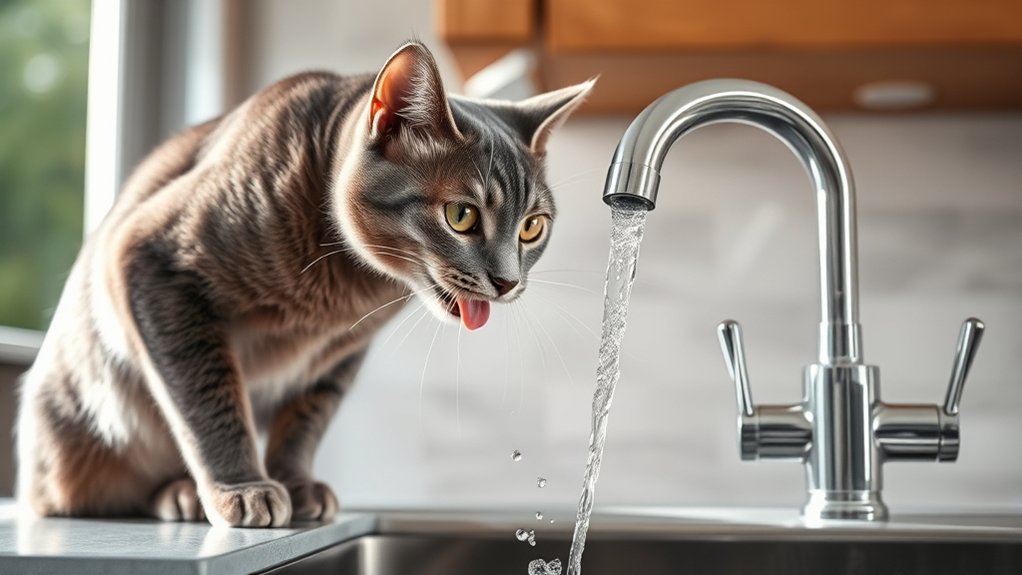
While ensuring the safety of faucet water is important, you might notice your cat consistently prefers drinking directly from the tap. This faucet attraction stems from several factors tied to their natural instincts and water preferences.
Running water is often fresher, cooler, and oxygenated, making it more appealing than stagnant bowl water. Additionally, the sound and movement stimulate your cat’s curiosity and encourage hydration.
| Factor | Explanation | Impact on Cat Behavior |
|---|---|---|
| Freshness | Running water is less stale | Encourages drinking |
| Temperature | Cooler than bowl water | Preferred for comfort |
| Movement & Sound | Stimulates natural hunting instincts | Increases interest |
Understanding these elements helps you cater to your cat’s hydration needs effectively.
How Faucet Water Contaminants Affect Your Cat’s Health
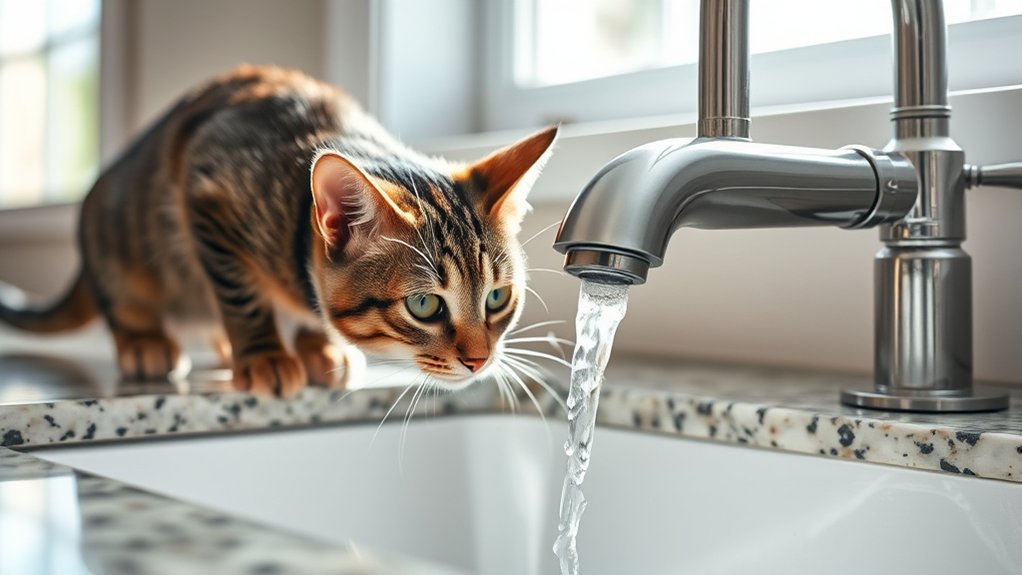
You need to be aware that faucet water often contains contaminants like chlorine, heavy metals, and bacteria, which can pose health risks to your cat. These substances may lead to digestive issues, skin problems, or more serious conditions over time.
Understanding how these contaminants affect your cat’s health helps you make safer hydration choices.
Common Faucet Water Contaminants
Although faucet water may seem clean, it often contains contaminants that can harm your cat’s health. Common contaminants include chlorine, heavy metals like lead and copper, bacteria, and pesticides. These substances can enter your water supply through aging pipes, agricultural runoff, or municipal treatment processes.
Without proper faucet water filtration, these impurities remain in the water your cat drinks. Chlorine, for example, can irritate your cat’s digestive system, while heavy metals can accumulate and cause long-term issues. Bacteria and parasites may pose infection risks.
To protect your cat, consider using a reliable faucet water filtration system that reduces these common contaminants. Doing so guarantees cleaner, safer water and helps maintain your feline’s overall well-being without compromising their hydration needs.
Health Risks From Contaminants
Contaminants commonly found in faucet water can pose significant health risks to your cat. Harmful substances like lead, chlorine, and bacteria may compromise your pet’s kidney and digestive health.
Since cats are sensitive to toxins, even low levels can cause symptoms such as vomiting, diarrhea, or lethargy. To protect your cat, you should regularly assess your water quality and consider installing a reliable faucet filtration system.
This helps remove impurities and guarantees safer drinking water. Without proper filtration, contaminants can accumulate, leading to chronic health issues. By prioritizing clean, filtered water, you reduce your cat’s exposure to harmful agents, promoting overall well-being and longevity.
Always consult your veterinarian if you suspect water-related health problems.
Risks of Letting Cats Drink Directly From the Faucet
While letting your cat drink directly from the faucet may seem harmless, it poses several risks that you should consider. Faucet water preferences might encourage your cat to drink from inconsistent sources, making it harder to monitor their hydration habits effectively.
The sudden flow and temperature of faucet water could startle or stress your cat, potentially leading to accidents or aversion to drinking water. Additionally, the faucet area may harbor bacteria or residues from cleaning products, increasing the risk of contamination.
Relying on faucet water also means you can’t control water quality as precisely as with a dedicated water bowl, which might affect your cat’s overall health. Understanding these risks helps you make informed decisions about your cat’s hydration and well-being.
Best Ways to Provide Safe Drinking Water for Your Cat
Providing your cat with safe drinking water is essential for their health and hydration. To guarantee this, always offer filtered water, which removes harmful contaminants. Avoid stagnant water, as it can harbor bacteria.
Use clean bowls, refreshed daily, and consider hydration tips like placing multiple water stations around your home to encourage drinking.
| Hydration Tips | Benefits | Emotional Impact |
|---|---|---|
| Provide filtered water | Reduces health risks | Peace of mind |
| Change water daily | Keeps water fresh | Trust and care |
| Use multiple bowls | Encourages drinking | Happiness for your cat |
| Choose safe containers | Avoids toxins | Confidence in safety |
| Monitor intake | Detects issues early | Protects your companion |
When Should You Consult a Vet About Your Cat’s Faucet Water Drinking Habits?
How can you tell if your cat’s habit of drinking faucet water signals a health concern? Monitor changes in cat behavior such as increased thirst, lethargy, vomiting, or weight loss.
If your cat suddenly drinks excessive faucet water or shows signs of discomfort, it may indicate underlying issues like kidney disease or urinary tract problems. You should consult a vet promptly to get professional vet advice and proper diagnosis.
Additionally, if your cat refuses bottled or filtered water but insists on the faucet, vet guidance can help rule out medical causes. Don’t ignore persistent or unusual drinking patterns; early intervention protects your cat’s health.
If your cat prefers faucet water over bottled, consult a vet to rule out health issues early.
Always prioritize your cat’s well-being by seeking vet advice whenever faucet water drinking habits seem abnormal or affect their overall condition.
Frequently Asked Questions
Can Faucet Water Temperature Affect My Cat’s Drinking Preference?
Yes, faucet water temperature can influence your cat’s hydration preferences. Cats often prefer cooler, fresh water, so adjusting the faucet water temperature to a cooler setting may encourage better drinking habits.
This can support proper hydration and keep your cat healthier overall.
Do Cats Need More Water if They Drink From the Faucet?
You don’t need to increase your cat’s water intake just because they drink faucet water. Faucet water benefits include encouraging better hydration habits, but overall hydration depends on total water consumption, not the source alone.
How Can I Train My Cat to Stop Drinking Faucet Water?
You might think stopping faucet water drinking is tough, but you can train your cat by offering faucet water alternatives like running water fountains. Encourage bowl drinking with fresh, clean water placed in multiple locations around your home.
Are Certain Cat Breeds More Attracted to Faucet Water?
You’ll find faucet attraction varies among breeds; some, like Siamese, show stronger interest in running water.
Understanding breed differences helps tailor hydration methods, ensuring your cat stays well-hydrated and content with safer water sources.
Does Faucet Water Consumption Impact Cat Hydration Differently Than Bowl Water?
Faucet water consumption doesn’t greatly impact your cat’s hydration levels compared to bowl water. However, some cats prefer running water, which might encourage better hydration if they avoid stagnant bowl water due to bowl water preferences.
Conclusion
So, you let your cat drink straight from the faucet, thinking it’s the freshest option—how ironic that what seems pure might carry hidden risks. While your feline friend’s preference for running water is natural, faucet water isn’t always the safest choice due to potential contaminants.
Instead, you can provide cleaner, filtered water to keep them healthy. Remember, what seems convenient might just be a sneaky invitation for health issues—so stay informed and cautious.
In conclusion, when considering can cats drink faucet water, it’s best to ensure the water is clean and safe to protect your pet’s well-being.

Leave a Reply