
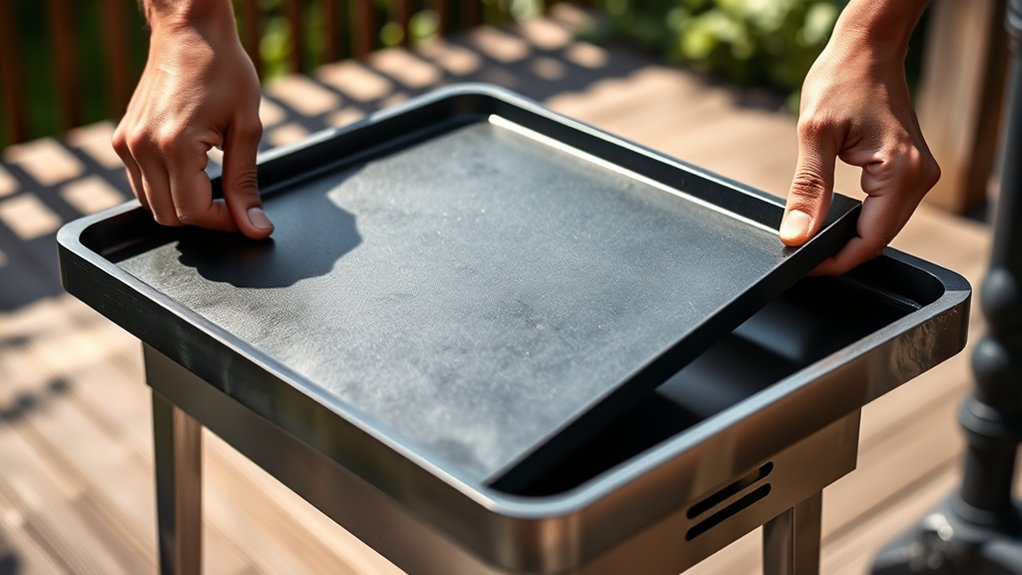
Yes, you can remove your Blackstone griddle top safely by first ensuring it’s completely cool and disconnected from any power or propane source.
This is an important step to prevent any accidents or injuries.
Use a screwdriver or wrench to loosen and remove the bolts securing the top.
Be prepared to handle some rust or stubborn screws with penetrating oil.
Always lift carefully, wearing gloves for protection.
Once removed, you can clean or maintain the griddle more easily.
Keep going to uncover detailed steps and helpful tips for the process.
Key Takeaways
- Yes, you can remove the Blackstone griddle top for cleaning or maintenance purposes.
- Ensure the griddle is completely cool and disconnected from propane before removal.
- Use screwdrivers and wrenches to loosen and remove bolts securing the griddle top.
- Carefully lift the griddle top using proper techniques to avoid injury or damage.
- Clean and inspect the griddle top regularly to prevent rust and maintain performance.
Is It Safe to Remove Your Blackstone Griddle Top?
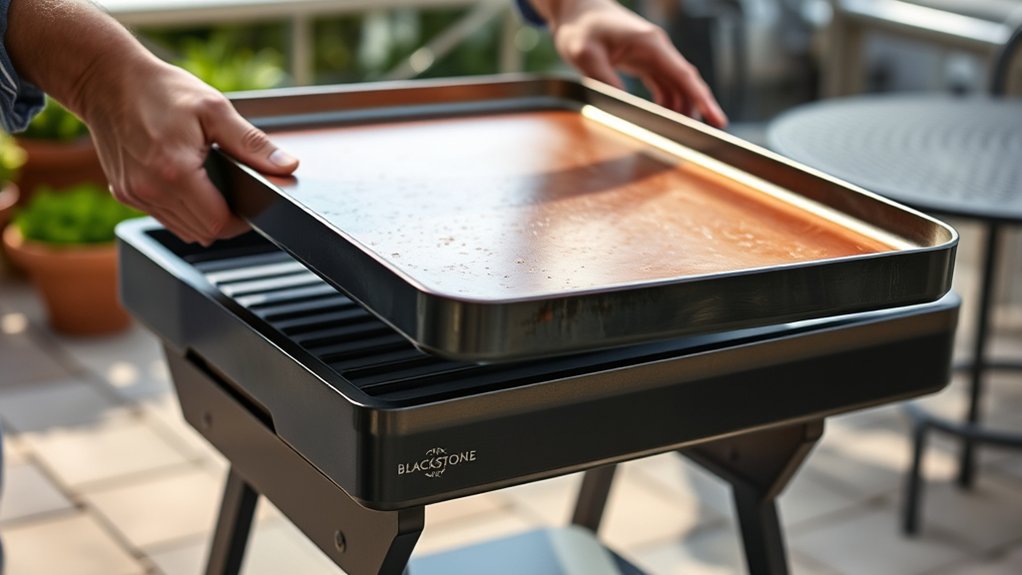
Wondering if it’s safe to remove your Blackstone griddle top? Yes, it is, but you need to follow essential safety precautions to avoid injury or damage. Always verify the griddle is completely cool before attempting removal to prevent burns. Disconnect the propane tank or power source for added safety.
Removing the griddle top is practical for thorough griddle maintenance, like cleaning grease buildup or inspecting burners. Handle the griddle top carefully. It’s heavy and can be awkward to lift alone. Use proper lifting techniques to protect your back.
Tools You’ll Need to Remove the Blackstone Griddle Top
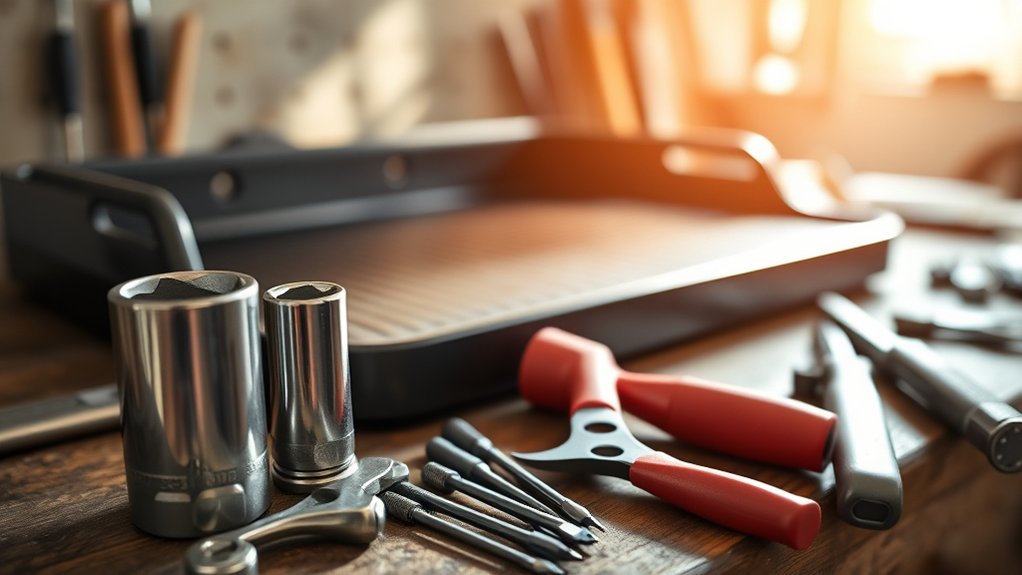
You’ll need a few essential tools like a wrench and screwdriver to remove your Blackstone griddle top safely. Don’t forget to wear safety gear, including gloves and eye protection, to prevent injuries.
Having the right equipment makes the process smoother and keeps you protected.
Essential Removal Tools
Removing the Blackstone griddle top requires a few key tools to make the process smooth and safe. Using the right tools supports effective removal techniques and guarantees your maintenance tips are easier to follow afterward. Here’s what you’ll need:
| Tool | Purpose |
|---|---|
| Screwdriver Set | Unscrews bolts securing top |
| Adjustable Wrench | Loosens nuts and bolts |
| Putty Knife | Separates griddle top gently |
These tools help you avoid damage during removal and allow for thorough cleaning or repairs. Having them ready simplifies your job and lets you maintain your Blackstone griddle efficiently. Always choose quality tools to improve your removal techniques and uphold your griddle’s longevity.
Safety Gear Requirements
Having the right tools on hand is only part of the process; protecting yourself during the removal of your Blackstone griddle top is just as important. First, always wear safety goggles to shield your eyes from debris or accidental sparks. Your eyes are vulnerable during disassembly, especially when loosening bolts or scraping residue.
Next, put on heat resistant gloves to protect your hands from residual heat, sharp edges, and metal parts. Even if the griddle has cooled, some sections may retain warmth or have rough surfaces that can cause cuts. Avoid skipping these precautions to prevent injuries.
How to Remove the Blackstone Griddle Top Step-by-Step
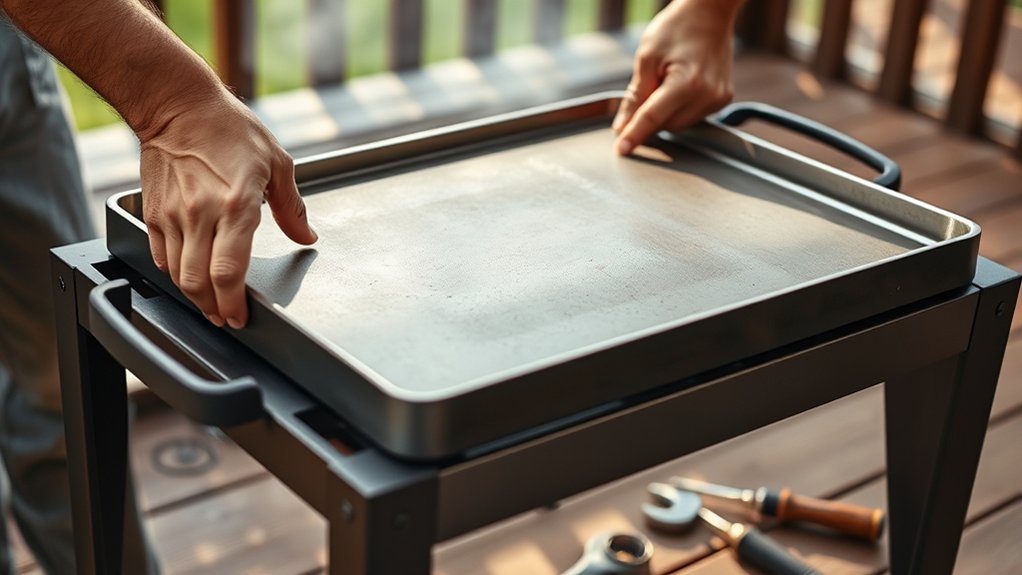
Before you start, make certain your Blackstone griddle is completely cool and disconnected from any power or gas sources. Begin by removing the grease tray and cleaning any residue around the edges.
Use a screwdriver or wrench to carefully loosen and remove the screws or bolts securing the griddle top. Keep track of all hardware for reassembly. Gently lift the griddle top, using proper removal techniques to avoid bending or damaging it.
Set it aside on a stable surface. This process is essential for effective griddle maintenance, allowing you to clean underneath and inspect for wear.
Following these steps guarantees your Blackstone griddle stays in top condition and prolongs its lifespan. Always handle parts carefully to prevent damage during removal.
Common Problems Removing the Blackstone Griddle Top
You might run into stubborn rust and debris that make lifting the griddle top tough. Tightened screws and bolts can also slow you down or cause damage if you force them.
Knowing how to handle these issues will save you time and frustration.
Stubborn Rust And Debris
Although removing the Blackstone griddle top is usually straightforward, stubborn rust and debris can complicate the process. You might find rust bonding parts together or debris clogging tight spaces, making removal tougher.
To tackle rust, apply a rust remover or mild abrasive, scrubbing gently to avoid damage. For debris management, use a brush or compressed air to clear particles from screws and corners.
After removal, focus on rust prevention by keeping the griddle dry and applying a thin layer of oil to metal surfaces. Regular cleaning and proper storage also help minimize debris buildup, ensuring smoother removal next time.
Addressing rust and debris early prevents damage and keeps your griddle in top shape for years.
Tightening Screws And Bolts
When screws and bolts are over-tightened, they can become difficult to remove, causing frustration during the Blackstone griddle top removal. To avoid this, familiarize yourself with proper tightening techniques before reassembling.
Different bolt types require specific torque levels; using a torque wrench helps prevent over-tightening. If you encounter stuck bolts, apply penetrating oil and let it sit to loosen corrosion or debris.
Use the correct screwdriver or socket size to avoid stripping the heads. For stubborn bolts, gently tap the handle with a rubber mallet to break the seal without damaging the hardware.
Alternatives to Removing Your Blackstone Griddle Top
Before deciding to remove your Blackstone griddle top, consider several effective alternatives that can save you time and effort. Instead of removal, use griddle cover alternatives like heavy-duty, heat-resistant covers to protect your cooking surface from debris and weather. These covers are easy to apply and offer excellent protection without disassembly.
Additionally, focus on griddle maintenance tips such as regular cleaning after each use, seasoning the surface to prevent rust, and tightening screws or bolts to maintain stability. These steps keep your griddle in top shape without removing the top.
Cleaning and Maintaining Your Blackstone Griddle After Removal
If you’ve decided to remove your Blackstone griddle top, proper cleaning and maintenance afterward will keep it performing well and extend its lifespan. Focus on effective cleaning techniques to eliminate residue and prevent rust. Start by scraping off food debris with a metal spatula, then apply warm water and mild soap for a thorough wash.
After cleaning, dry it completely to avoid moisture damage.
Use these maintenance tips to keep your griddle in top shape:
Season the griddle surface with oil to maintain its non-stick layer.
Store the griddle top in a dry, covered area to protect it from the elements.
Regularly inspect for rust and treat spots promptly with a gentle abrasive and reseasoning.
These steps guarantee your griddle stays ready for cooking whenever you need it.
Frequently Asked Questions
Can I Replace the Blackstone Griddle Top With a Different Material?
You can replace your Blackstone griddle top with alternative surfaces, but make certain the griddle materials withstand high heat and fit securely. Choose durable, heat-resistant options like cast iron or stainless steel for safe, efficient cooking.
How Heavy Is the Blackstone Griddle Top to Lift Alone?
The Blackstone griddle weight feels like lifting a small anvil, around 50-70 pounds. Use proper lifting techniques: bend knees, keep your back straight, and grip firmly to handle it safely and avoid strain or injury.
Will Removing the Griddle Top Void My Warranty?
Removing your Blackstone griddle top may have warranty implications if not done per guidelines. Always check the manual first.
Following proper maintenance tips guarantees your warranty stays intact and your griddle performs well.
Can I Use the Griddle Top on Other Cooking Appliances?
Sure, you can use your griddle top elsewhere if you enjoy playing appliance roulette. Its griddle top compatibility is limited.
For alternative cooking methods, make certain your device can handle the weight and heat safely before trying.
How Do I Store the Griddle Top Safely When Not in Use?
You should clean and dry the griddle top thoroughly, then use griddle storage solutions like protective covers to prevent rust and damage.
Store it in a dry, cool place to keep it in great condition for your next cookout.
Conclusion
Removing your Blackstone griddle top might seem tricky, but with the right tools and steps, it’s totally doable. You might hit a snag or two—stubborn bolts or stuck parts—but don’t let that stop you.
Before you plunge in, weigh your options; sometimes cleaning or maintenance can save you the hassle.
Ready to take it off? Just remember, the real challenge—and satisfaction—comes right after you lift that griddle top. Removing your Blackstone griddle top is definitely achievable with patience and care.

Leave a Reply