
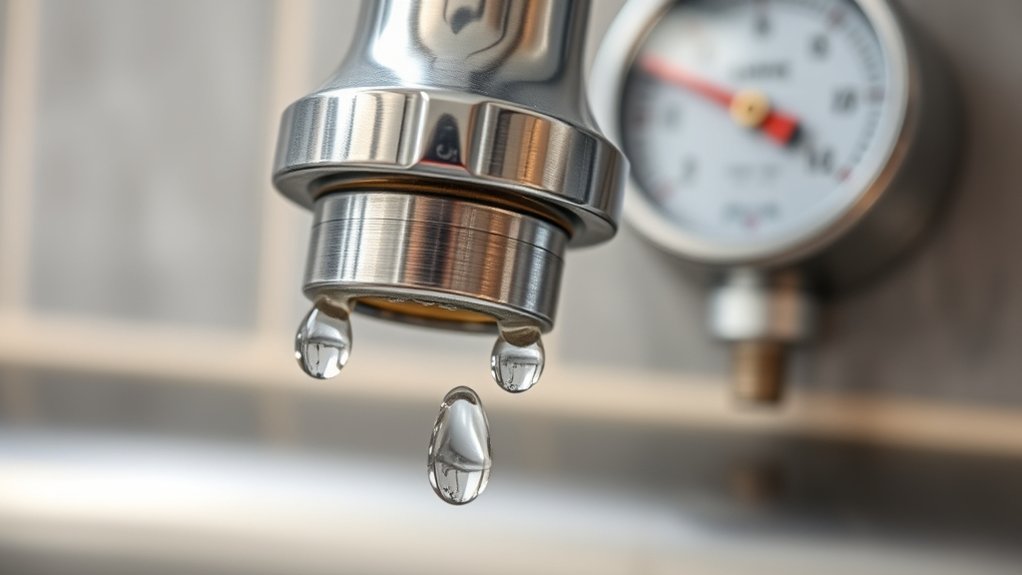
Yes, high water pressure can cause a leaky faucet by putting extra stress on its internal components, such as seals and washers.
This increased pressure accelerates wear and tear, which may lead to cracks or loosening parts. As a result, you might notice drips or more serious leaks developing over time.
If your home’s water pressure regularly exceeds 80 psi, it is likely damaging your plumbing system. High pressure not only affects faucets but can also harm pipes and other fixtures.
Fortunately, there are practical ways to measure, manage, and fix high water pressure to protect your faucets and plumbing.
Taking these steps can help extend the life of your fixtures and prevent costly repairs.
Key Takeaways
- High water pressure puts excessive stress on faucet seals and washers, leading to accelerated wear and potential leaks.
- Pressure fluctuations cause faucets to expand and contract, resulting in cracks that can cause leaks.
- Leaky faucets often show signs like intermittent dripping and minor leaks around the spout due to high pressure.
- Consistent water pressure above 80 psi increases the risk of faucet damage and leaks.
- Installing pressure regulators or pressure-reducing valves can prevent leaks caused by high water pressure.
Why High Water Pressure Can Cause Faucet Damage
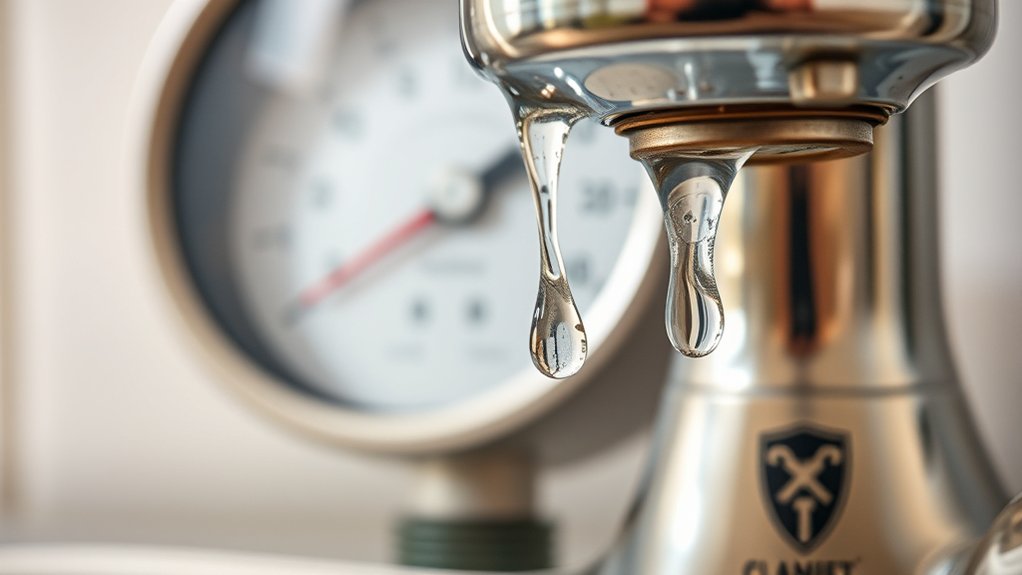
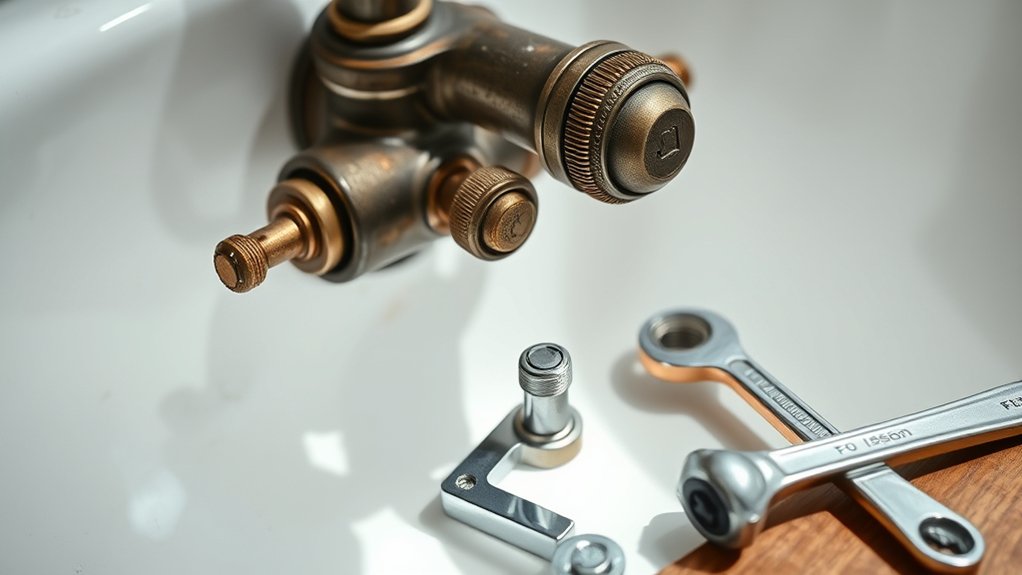
When water pressure exceeds recommended levels, it puts excessive stress on your faucet’s internal components. This constant strain accelerates faucet wear, especially on seals, washers, and valves designed to handle standard pressure ranges.
Pressure fluctuations worsen the issue by creating inconsistent forces that cause these parts to degrade unevenly and prematurely. Over time, the repeated expansion and contraction from high pressure can lead to cracks or loosened fittings, compromising the faucet’s integrity.
You may not notice immediate damage, but persistent high pressure gradually weakens the system, increasing the likelihood of leaks and failures. Managing water pressure within ideal levels protects your faucet’s lifespan by minimizing wear and ensuring smooth operation without the damaging effects of pressure fluctuations.
How to Tell If High Water Pressure Is Causing Your Faucet to Leak
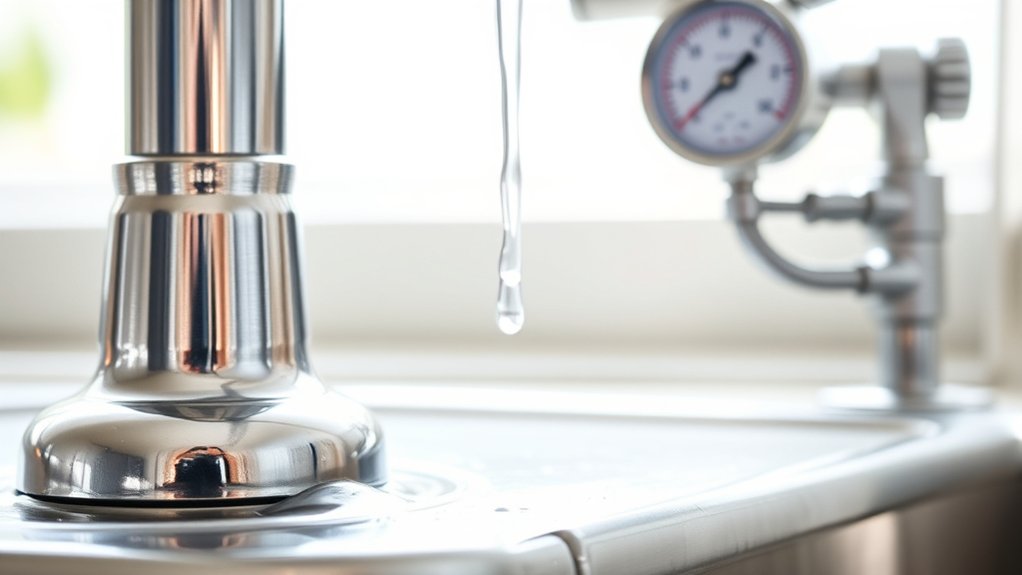
Excessive water pressure often leads to subtle signs that hint at faucet damage before a full leak develops. To tell if high water pressure is causing your faucet to leak, watch for unusual faucet wear such as worn-out washers or damaged seals.
These components deteriorate faster under constant stress from pressure fluctuations. You might notice intermittent dripping, especially after use, or hear loud noises like banging or whistling when you turn the faucet on or off.
Check for minor leaks around the base or spout, which often signal internal damage due to pressure. If your faucet’s performance suddenly worsens without visible damage, pressure fluctuations are likely stressing internal parts.
Addressing these early signs can prevent costly repairs and extend your faucet’s lifespan.
Measuring and Testing Your Home’s Water Pressure
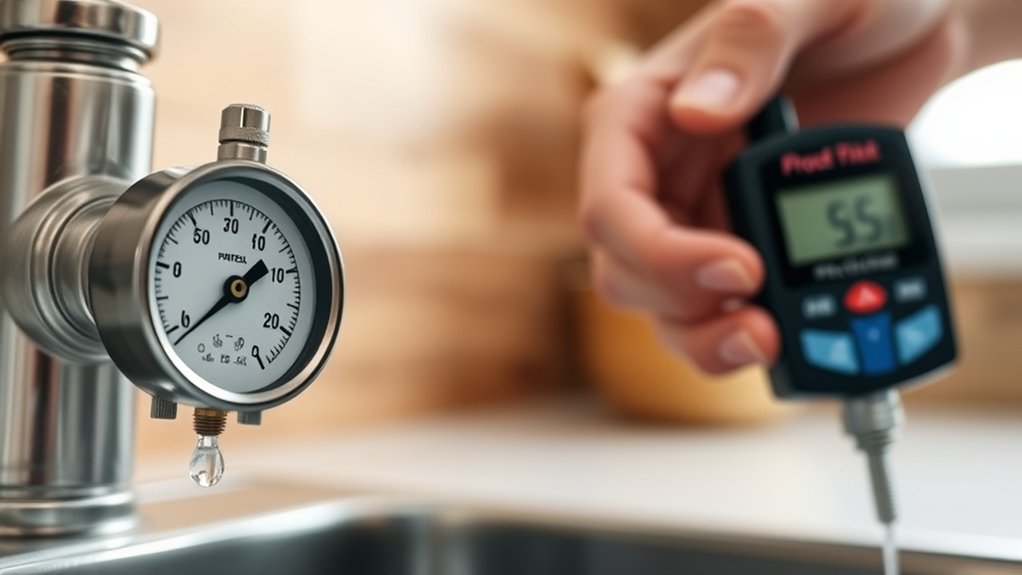
If you suspect your home’s water pressure is causing faucet issues, measuring it accurately is crucial. Start by turning off all water fixtures to get a true baseline.
Attach a pressure gauge to an outdoor hose bib or a laundry faucet, where you can access the main water line pressure. Open the valve fully and observe the reading on the pressure gauge.
Typical residential water pressure ranges between 40-60 psi; anything above 80 psi is considered high and may contribute to leaks. Repeat the test at different times to verify consistency, as pressure can fluctuate.
If you notice readings consistently exceeding safe levels, you’ve identified a probable cause for your faucet leaks. Accurate measurement using a proper pressure gauge is the first step toward diagnosing your water pressure problem.
Easy Ways to Lower High Water Pressure and Fix Faucet Leaks
Since high water pressure can damage your plumbing and cause leaks, you’ll want to take immediate steps to reduce it. Installing pressure regulators is one of the most effective solutions. These devices control the incoming water pressure, keeping it within safe limits and preventing strain on your faucets.
Regular faucet maintenance also helps mitigate leaks; check for worn washers, O-rings, and seals, replacing them promptly. You can manually adjust pressure by partially closing the main shutoff valve to reduce flow. Additionally, consider installing a pressure-reducing valve if your home’s pressure consistently exceeds 80 psi.
When to Call a Plumber for High Water Pressure and Faucet Leaks
How do you know when a high water pressure issue or faucet leak requires professional help? If you notice persistent dripping despite tightening or replacing washers, or if water pressure readings exceed 80 psi, these are clear plumber signs indicating the need for expert intervention.
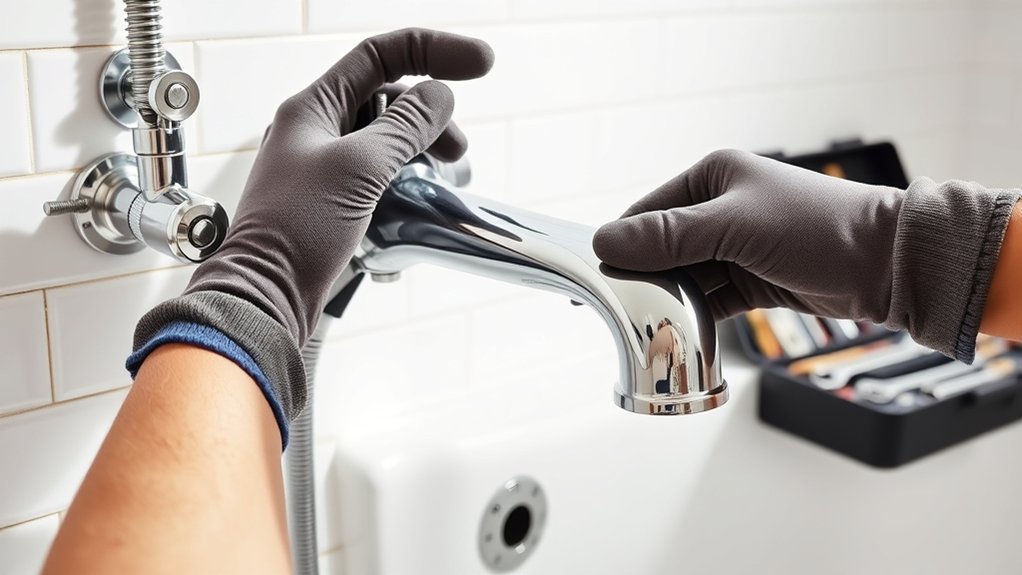
Attempting faucet repair without proper tools or knowledge can worsen damage. Call a plumber when leaks continue after basic fixes, or if you detect water hammer noises, fluctuating pressure, or valve malfunctions.
A professional can install pressure regulators, diagnose hidden pipe damage, and perform precise faucet repair to prevent costly water waste and structural harm. Don’t delay—addressing these issues promptly guarantees system longevity and safeguards your home’s plumbing integrity.
Frequently Asked Questions
Can High Water Pressure Affect Other Plumbing Fixtures Besides Faucets?
Yes, high water pressure can cause toilet leaks and showerhead damage. You’ll notice worn seals and cracks, leading to leaks or malfunctions.
Managing pressure protects all fixtures, preventing costly repairs and maintaining plumbing efficiency.
Does Water Temperature Impact Faucet Leaks Caused by Pressure?
Yes, temperature fluctuations can worsen leaks by expanding and contracting faucet components under pressure.
You should monitor water temperature changes to support leak prevention and reduce stress on seals, extending your faucet’s lifespan.
Are Certain Faucet Materials More Resistant to High Water Pressure Damage?
You’ll find brass faucets more resistant to high water pressure damage due to their durability. Ceramic cartridges also handle pressure better, reducing leaks and wear.
Choosing these materials helps maintain faucet integrity under stress.
How Often Should I Check My Home’s Water Pressure?
How often should you check your water pressure? Ideally, you should test it biannually as part of your maintenance schedule to prevent damage, detect leaks early, and guarantee your home’s plumbing system functions efficiently without surprises.
Can Installing a Pressure Regulator Save on Water Bills?
Yes, installing a pressure regulator offers pressure regulator benefits by controlling water flow, reducing waste, and preventing damage. This leads to water bill savings, as you use water more efficiently and avoid costly repairs from high pressure.
Conclusion
High water pressure can wear down your faucets like a river slowly eroding a rock. Over time, this constant force can cause the seals and joints inside your faucet to weaken.
If you notice leaks, don’t ignore them—test your water pressure with a gauge to confirm the cause. Lowering pressure using a regulator or pressure-reducing valve can prevent further damage and stop leaks.
If you’re unsure or the problem persists, call a plumber to guarantee your system stays in good shape and avoid costly repairs down the line. Ultimately, maintaining proper water pressure is key because high water pressure can cause a leaky faucet.

Leave a Reply