
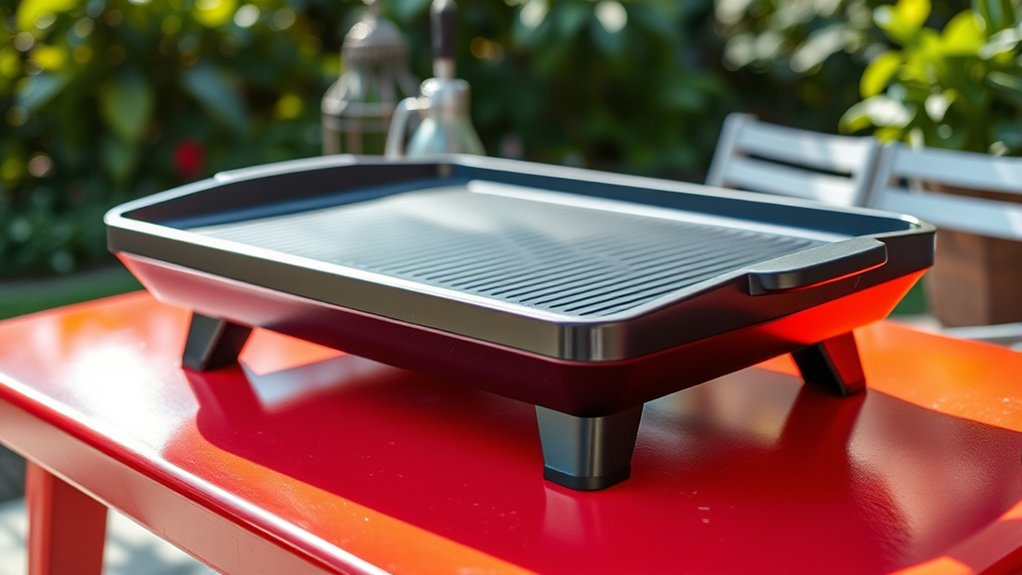
You shouldn’t use a Blackstone griddle on a plastic table because the high heat can easily melt or warp the surface, compromising stability and safety.
Plastic tables typically can’t handle temperatures above 200°F and risk releasing harmful fumes when overheated. This damage can lead to accidents and shorten your griddle’s lifespan.
Instead, opt for sturdy, heat-resistant surfaces like metal or treated wood and use proper heat protection to shield your table.
Keep exploring to find the safest setup for your griddle.
Key Takeaways
- Plastic tables typically cannot withstand the high heat generated by Blackstone griddles and may melt or warp.
- Using a Blackstone griddle directly on plastic tables risks structural instability and potential safety hazards.
- Heat from the griddle can cause discoloration, surface damage, and release harmful fumes from plastic.
- It is safer to place the griddle on sturdy wooden or metal tables designed for heat resistance.
- If using a plastic table, always employ heat-resistant mats or shields between the griddle and table surface.
Is a Plastic Table Safe for Your Blackstone Griddle?
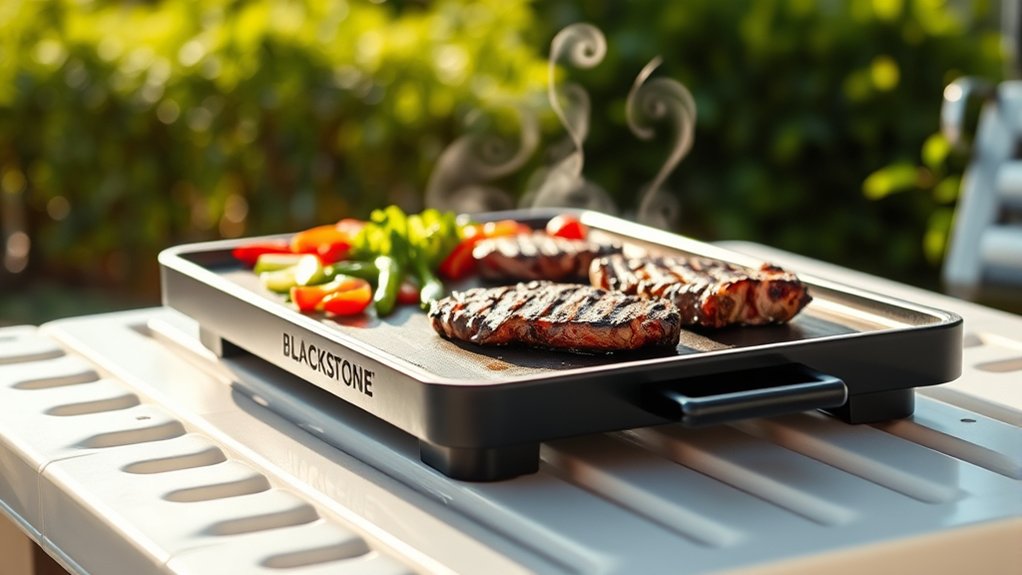
Although plastic tables are lightweight and convenient, they generally aren’t designed to withstand the high heat generated by a Blackstone griddle. When considering safety, you need to evaluate the heat resistance of the plastic material.
Plastic tables are convenient but typically cannot handle the intense heat from a Blackstone griddle safely.
Most plastic tables have low heat tolerance, often melting or warping under prolonged exposure to temperatures exceeding 200°F. Additionally, table stability is essential; Blackstone griddles are heavy and generate vibrations during cooking, so the table must support the weight without wobbling or tipping.
If the plastic table lacks sufficient structural integrity, it poses a safety risk, potentially causing the griddle to fall. To guarantee safe use, verify the manufacturer’s specifications for heat resistance and load capacity.
Using a heat-resistant barrier or placing the griddle on a more stable surface is recommended to prevent accidents.
How Heat From a Blackstone Griddle Can Damage Plastic Tables
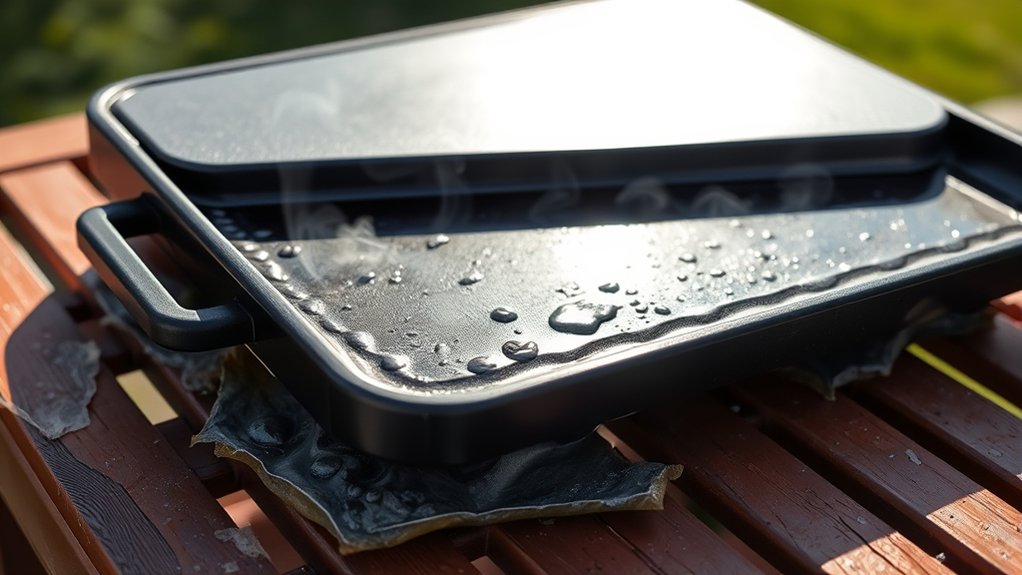
When you place a Blackstone griddle directly on a plastic table, the intense heat it produces can quickly weaken and deform the plastic surface. Most plastic tables lack sufficient heat resistance to handle the griddle’s high temperatures, compromising table durability. The heat can cause:
- Warping and melting of the plastic, leading to structural instability
- Discoloration and surface degradation that reduce aesthetic appeal and lifespan
- Potential release of harmful fumes from overheated plastic, posing safety hazards
Since plastic materials vary in composition, many can’t sustain prolonged heat exposure without damage. To maintain safety and preserve your table’s integrity, avoid direct contact between the griddle and plastic. Proper heat insulation is essential to prevent irreversible damage and guarantee your setup remains safe and functional.
Best Alternatives to Plastic Tables for Your Blackstone Griddle
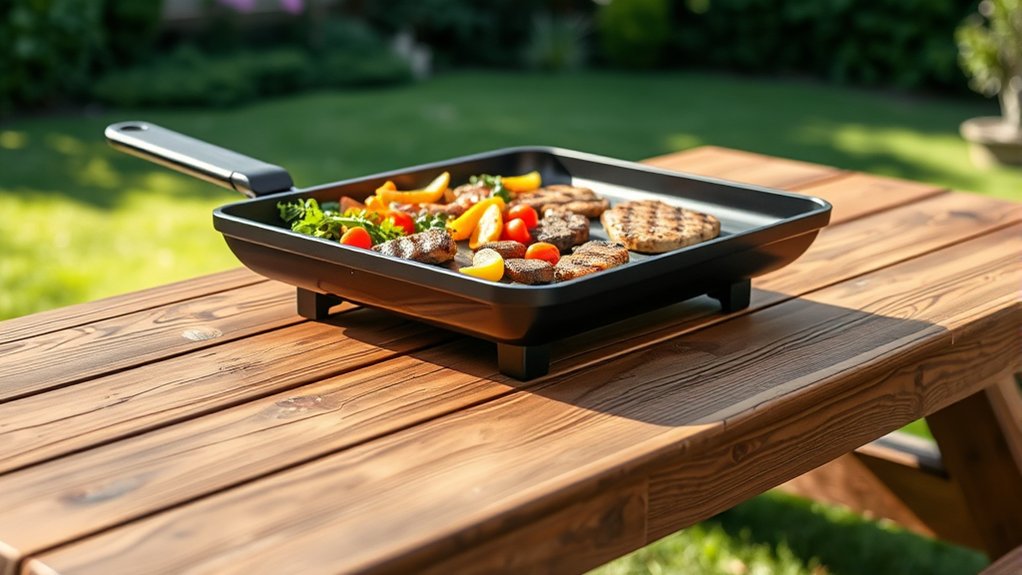
Where should you place your Blackstone griddle to guarantee maximum safety and durability? Avoid plastic tables and opt for sturdy wooden surfaces or industrial-grade metal tables. Both materials withstand high heat without warping or melting, ensuring structural integrity during cooking.
| Surface Type | Heat Resistance | Stability |
|---|---|---|
| Wooden Surfaces | Moderate | High (with proper thickness) |
| Metal Tables | High | Very High |
| Plastic Tables | Low | Low |
Wooden surfaces must be thick and treated to resist heat damage, while metal tables, especially steel or aluminum, dissipate heat effectively and provide excellent durability. Choosing these alternatives minimizes fire hazards and prolongs your griddle’s lifespan.
How to Protect Your Table When Using a Blackstone Griddle
A critical step to preserving your table’s integrity while using a Blackstone griddle is implementing effective heat protection measures. Heat from the griddle can easily damage plastic surfaces, so employing proper table protection methods is vital.
Start by placing heat resistant surfaces between the griddle and your table. Use materials designed to withstand high temperatures to prevent melting or warping. Consider these options:
Place heat-resistant materials between your griddle and table to prevent damage from high temperatures.
- A thick, insulated silicone mat that disperses heat evenly
- A sturdy metal or ceramic heat shield that resists thermal transfer
- A dedicated griddle stand with built-in heat resistant feet
Always make sure your heat resistant surfaces cover the entire contact area to avoid hot spots. These precautions minimize risk, prolong your table’s lifespan, and maintain safety during cooking sessions.
Frequently Asked Questions
Can a Blackstone Griddle Be Used Indoors Safely?
You shouldn’t use a Blackstone griddle indoors due to carbon monoxide risks. For safe indoor cooking, guarantee proper ventilation, use carbon monoxide detectors, and follow all safety precautions to prevent fire hazards and toxic fume buildup.
What Cleaning Products Are Safe for a Blackstone Griddle?
You’ll want warm water, mild dish soap, and a non-abrasive scrubber for cleaning. Avoid harsh chemicals or steel wool to protect your Blackstone.
Follow these cleaning tips for effective griddle maintenance and long-lasting performance.
How Long Does a Blackstone Griddle Take to Heat Up?
Your Blackstone griddle typically reaches ideal heating time within 10-15 minutes. Use temperature control knobs to adjust heat precisely, ensuring even cooking and preventing overheating.
This maintains safety and extends your griddle’s lifespan effectively.
Can You Cook Acidic Foods on a Blackstone Griddle?
Though acidic foods can corrode some surfaces, you can safely cook them on a Blackstone griddle by using proper cooking techniques and cleaning promptly. This helps prevent damage and guarantees food safety during your grilling sessions.
Is It Safe to Leave a Blackstone Griddle Outside Overnight?
You shouldn’t leave your Blackstone griddle outside overnight without proper griddle protection. For safe outdoor storage, cover it with a weather-resistant cover and store it in a sheltered area to prevent rust and damage.
Conclusion
You might think placing your Blackstone griddle on a plastic table is a simple setup, but ironically, that choice could melt your plans—literally. Plastic tables just aren’t built to handle the intense heat, risking warping or worse.
To keep your cooking safe and your surfaces intact, opt for metal or heat-resistant stands instead. If you must use a plastic table, always use a proper heat deflector.
Safety isn’t optional when you’re grilling with fire. Ultimately, using a Blackstone griddle on a plastic table is not recommended unless you take extra precautions to protect the surface.

Leave a Reply