
You can usually drink water from your faucet if your local water source is well-regulated and treated. Drinking water from the faucet is generally safe in many areas, but it depends on local conditions.
Factors like aging pipes, local contamination, or plumbing issues can affect safety. It’s important to test your tap water regularly or check local quality reports to guarantee it’s free of harmful bacteria or chemicals.
If contamination is suspected, boiling the water or using certified filters can protect you. Keep in mind, understanding your water’s condition helps you stay safe and healthy.
Key Takeaways
- Tap water safety depends on local regulations, water sources, and treatment processes specific to your area.
- Testing your tap water for contaminants like bacteria and lead ensures it’s safe to drink.
- Boil water or use certified filters if you suspect contamination or during advisories.
- Aging pipes or plumbing issues in your home can affect water quality even if the supply is safe.
- Regularly check local water quality reports and advisories to stay informed about tap water safety.
Can You Drink Tap Water Where You Live?
Where exactly you live plays an essential role in determining whether you can safely drink tap water. Different regions have varying local regulations that govern water quality standards, treatment processes, and monitoring. These rules guarantee tap water meets safety criteria, but standards differ widely depending on the country or municipality.
Additionally, the type and condition of water sources supplying your area, such as rivers, lakes, or underground aquifers, significantly impact water safety. If local regulations are strict and regularly enforced, your tap water is more likely to be safe. However, in places with lax oversight or vulnerable water sources, contamination risks increase.
It’s wise to review your area’s water quality reports and stay informed about local water management to make a cautious, evidence-based decision about drinking tap water directly.
What Can Affect Tap Water Quality?
Although tap water often undergoes treatment, several factors can still influence its quality before it reaches your faucet. Water contaminants like bacteria, lead, and agricultural runoff can enter the supply through environmental pollution or aging infrastructure.
Additionally, plumbing issues inside your home, such as corroded pipes or faulty fixtures, can introduce metals and other harmful substances into your water. Even well-maintained systems can experience temporary contamination during repairs or disruptions.
Being aware of these risks helps you understand why tap water quality can vary. While municipal treatment reduces many hazards, it’s important to recognize that external factors and plumbing conditions directly affect the safety and taste of your water.
Taking precautions based on this knowledge guarantees you minimize exposure to potential contaminants.
How to Test Your Tap Water for Safety
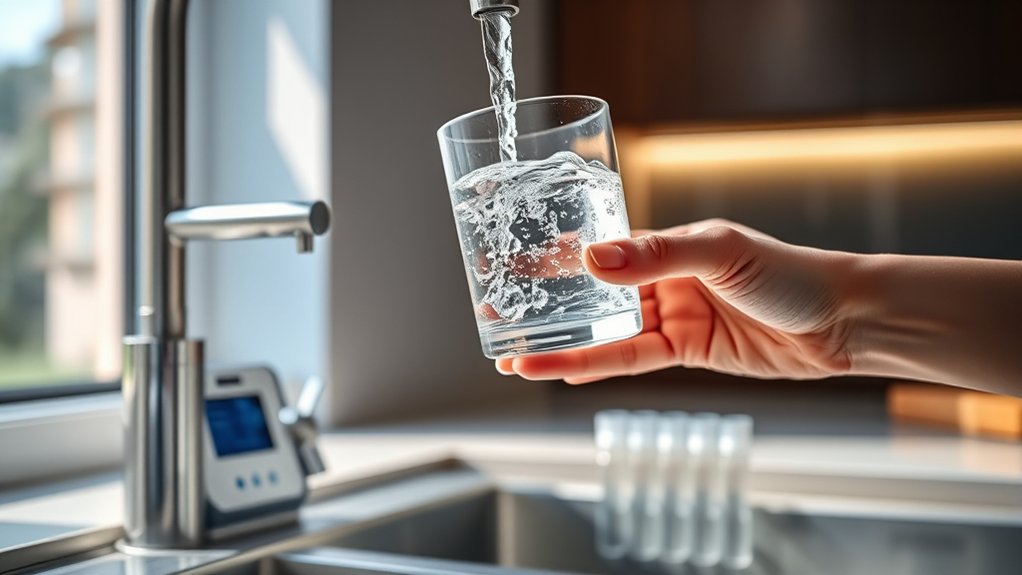
How can you be certain your tap water is safe to drink? Water testing is the most reliable way to find out. Start by collecting a sample in a clean container and sending it to a certified laboratory for analysis.
Labs test for contaminants like bacteria, lead, nitrates, and chemicals that can pose health risks. You can also use at-home water testing kits for preliminary checks, but lab results are more accurate.
Follow safety measures by regularly testing your water, especially if you live in an area with older pipes or known pollution. Keep records of your results and stay informed about local water quality reports.
Taking these steps guarantees you’re proactive about your water’s safety and can address any issues promptly.
What to Do When Tap Water Isn’t Safe
If your tap water tests reveal contamination or potential health risks, you need to take immediate steps to protect yourself and your family. Start by boiling water for at least one minute to kill harmful microorganisms. Boiling is a reliable, low-cost method that guarantees microbiological safety during emergencies.
Next, consider installing certified filtration systems designed to remove specific contaminants like lead, chlorine, or bacteria. Choose filters tested by reputable agencies, and replace cartridges regularly. Avoid using untested or homemade filters, as they may not effectively remove hazards.
Additionally, stay informed about local water quality reports and advisories. If contamination persists, use bottled water for drinking and cooking until the issue resolves. Taking these precautions helps minimize health risks linked to unsafe tap water.
Frequently Asked Questions
Does Boiling Tap Water Remove All Contaminants?
Boiling effectively kills most pathogens, but it doesn’t remove all water contaminants like heavy metals or chemicals. You shouldn’t rely solely on boiling; consider additional filtration for safer drinking water.
Stay cautious and informed.
Can Old Plumbing Pipes Affect Water Taste?
Imagine a medieval alchemist’s lab. Old pipes suffer corrosion, releasing metals that alter water quality. You’ll notice off tastes or odors, so testing or replacing aging plumbing guarantees your water stays safe and palatable.
Is Filtered Tap Water Better Than Bottled Water?
Filtered tap water often offers better benefits like reduced contaminants and environmental impact, while bottled water provides convenience.
You should weigh health advantages against plastic waste and cost before deciding which suits your lifestyle best.
How Often Should Faucet Water Filters Be Replaced?
You shouldn’t wait a millennium to replace your faucet water filter! For ideal water quality, change it every 2-3 months.
Regular filter maintenance prevents contaminants buildup, ensuring safe, clean water for your daily use.
Can Pets Safely Drink Tap Water?
Yes, your pets can safely drink tap water if your local water meets safety standards. Prioritize pet hydration by ensuring water safety.
Consider filtered water if contaminants or chlorine levels concern you to protect their health.
Conclusion
Think of your tap water as a clear glass reflecting your health. While many places deliver safe, clean water, unseen factors like pipes or contaminants can cloud that reflection.
By testing your water regularly, you hold the power to guarantee it stays pure and safe to drink.
If it’s not up to standard, take action to protect yourself—because your well-being deserves nothing less than clarity and care every time you fill your glass.
Ultimately, to ensure your safety, always ask, “Can I drink water from faucet?” and make informed decisions based on the quality of your tap water.

Leave a Reply