

You shouldn’t drain your hot water heater with a regular faucet because hot water can cause burns and might damage the faucet or plumbing. Always use the water heater’s designated drain valve located at the base of the tank for safety and proper sediment removal.
Before draining, make sure to turn off the power or gas supply and shut the cold water inlet valve.
Following these correct steps guarantees safe, effective draining and helps extend your heater’s lifespan.
To get the full process and best maintenance tips, keep exploring further. Proper care ensures your hot water heater runs efficiently and lasts longer.
Key Takeaways
- It is unsafe to drain a hot water heater using a regular faucet due to risk of burns and potential faucet damage.
- The designated drain valve at the base of the water heater should be used for draining.
- Draining through an indoor faucet may cause contamination of potable water lines and is not recommended.
- Always turn off power and cold water supply before draining the heater through the proper valve.
- Opening a hot water faucet inside the home helps relieve pressure but is not a substitute for using the drain valve.
Why and When You Need to Drain Your Hot Water Heater
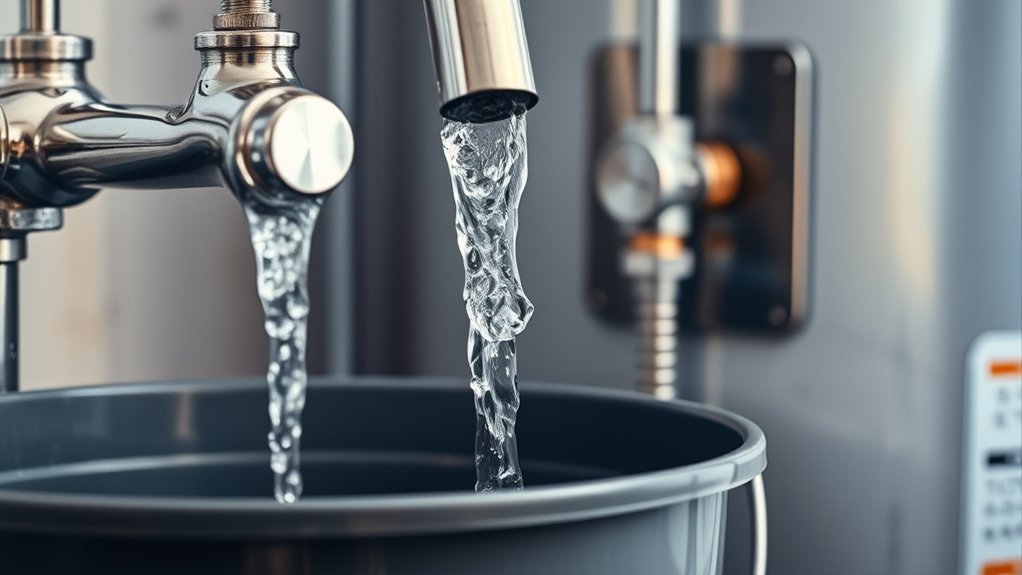
Although your hot water heater works continuously to supply heated water, you need to drain it periodically to remove sediment buildup that impairs efficiency and shortens its lifespan. Sediment buildup, composed of minerals and debris, collects at the tank’s bottom, reducing heat transfer and causing corrosion.
For effective water heater maintenance, plan to drain your unit every six to twelve months, depending on water hardness and usage. Frequent draining prevents sediment accumulation, improves heating efficiency, and extends service life.
Signs indicating immediate draining include rumbling noises, reduced hot water capacity, or discolored water. By adhering to a regular draining schedule, you maintain peak performance and avoid costly repairs.
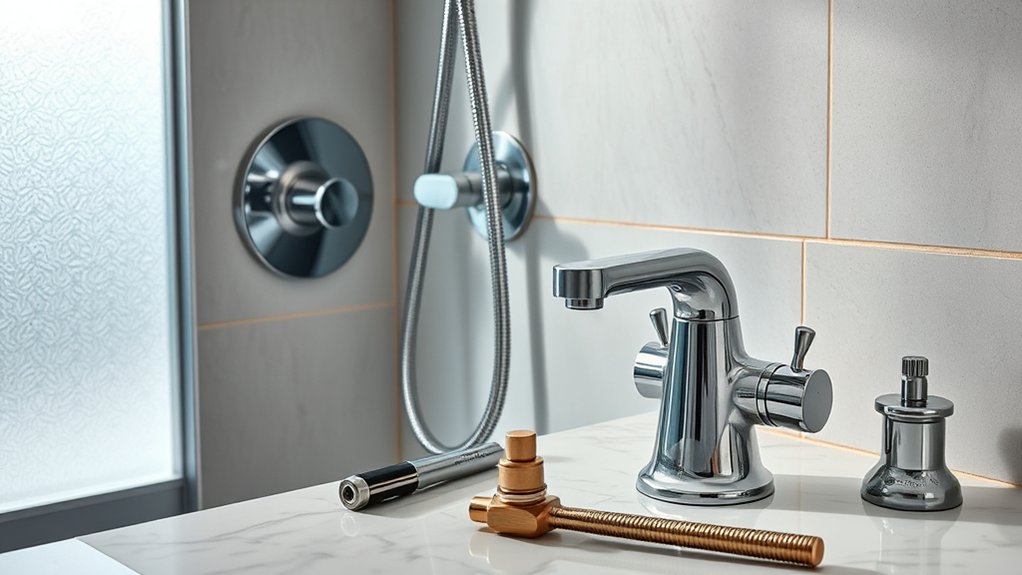
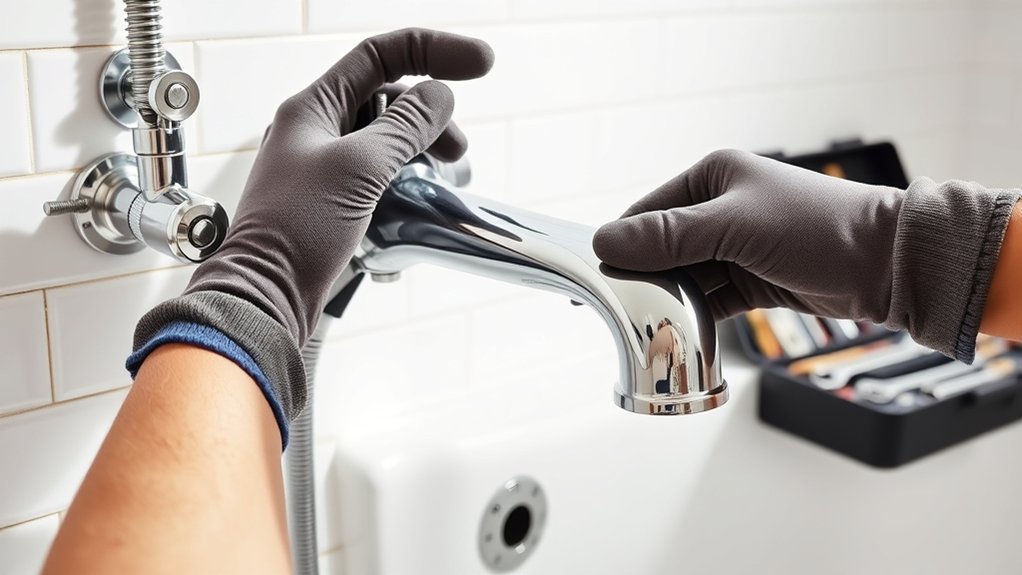
Is It Safe to Drain Your Hot Water Heater Using a Faucet? When You Shouldn’t
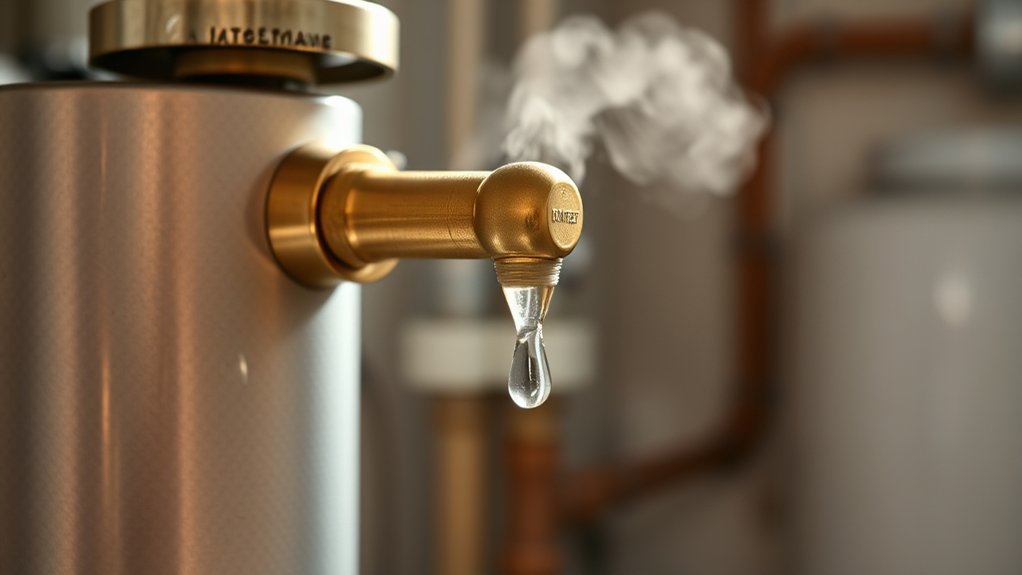
Regularly draining your hot water heater helps maintain efficiency, but using a faucet to do so isn’t always safe or appropriate. Faucet safety is essential because the water inside your heater can reach scalding temperatures.
If you drain hot water through a regular faucet, you risk burns or damage to the faucet itself. Avoid using indoor faucets connected to potable water lines, as sediment and rust can clog or contaminate your plumbing system.
Also, don’t drain when the heater is still hot. This increases hot water hazards greatly. Instead, use the designated drain valve at the base of the heater.
How to Safely Drain Your Hot Water Heater Step-by-Step
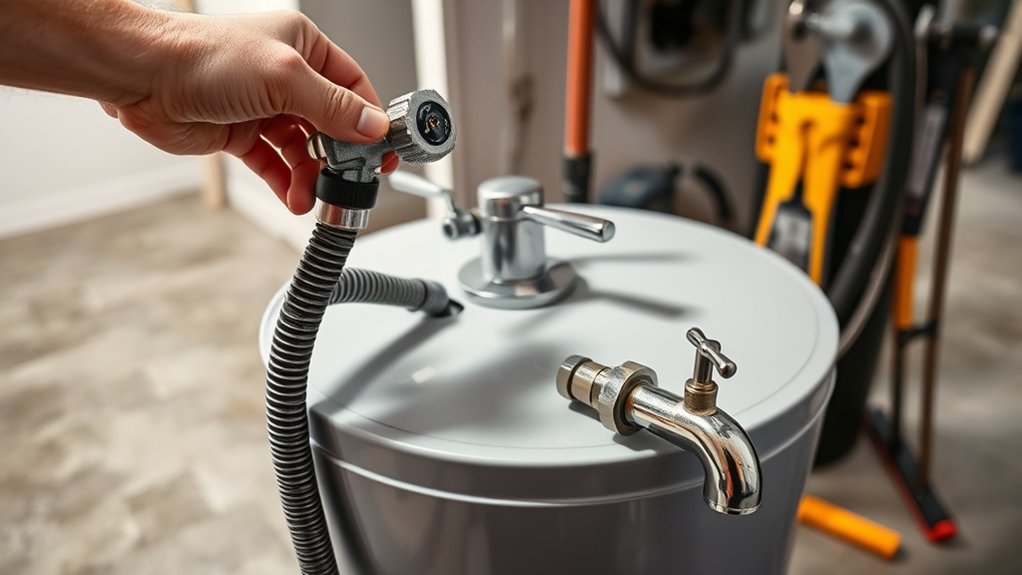
Follow these five essential steps to safely drain your hot water heater, minimizing risks and guaranteeing proper maintenance. First, turn off the power supply. Electric heaters require switching off the breaker, while gas heaters need the pilot light off.
Next, shut off the cold water inlet valve to stop additional water flow. Attach a garden hose to the drainage valve, directing it to a safe drainage location. Open a hot water faucet inside your home to relieve pressure.
Then, carefully open the drainage valve to allow water to flow out. Always follow safety precautions by wearing gloves and eye protection, and make certain the water has cooled sufficiently before starting.
These drainage techniques reduce hazards and protect your heater’s integrity during maintenance.
Essential Maintenance After Draining Your Hot Water Heater
Once you’ve drained your hot water heater, perform essential maintenance to guarantee peak performance and extend its lifespan. Start by inspecting the anode rod; replace it if it’s considerably corroded to prevent tank deterioration.
Flush the tank with clean water to remove residual sediment, improving water quality and efficiency. Check the temperature-pressure relief valve for proper function. Replace it if faulty to maintain safety standards.
Examine all plumbing connections and valves for leaks, tightening or repairing as needed. Finally, refill the tank slowly, ensuring air escapes via the open faucet to prevent airlocks.
Regularly scheduling this preventive maintenance after draining helps maintain ideal water quality and reduces the risk of costly repairs, ensuring your hot water heater operates reliably over time.
Frequently Asked Questions
Can Draining Improve My Water Heater’s Energy Efficiency?
Yes, draining your water heater regularly reduces sediment buildup, improving heat transfer and energy savings. You’ll boost efficiency by preventing insulation loss and prolonging the heater’s lifespan through proper maintenance.
How Often Should I Flush Sediment From My Water Heater?
Like clockwork in the Age of Enlightenment, you should flush sediment buildup from your water heater every six months. Regular water heater maintenance prevents efficiency loss and prolongs your unit’s lifespan, keeping your hot water flowing efficiently.
Will Draining My Water Heater Affect Water Pressure?
Draining your water heater temporarily lowers water pressure as sediment buildup clears. Once flushed, pressure stabilizes, improving flow and efficiency.
Regular draining prevents sediment accumulation, maintaining consistent water pressure and prolonging heater lifespan.
Can I Drain a Water Heater With No Drain Valve?
Draining a water heater without a drain valve is like trying to empty a bathtub without the plug; you’ll need water heater alternatives such as siphoning or disconnecting pipes to flush out sediment buildup safely and effectively.
What Tools Do I Need to Drain a Hot Water Heater?
You’ll need a hose attachment connected to the drain valve to safely channel water outside or to a drain. Additionally, have a screwdriver and a bucket ready for loosening the valve and catching spills.
Conclusion
Draining your hot water heater using a faucet can be a lifesaver for maintenance, but you’ve got to do it right to avoid disasters. Follow the proper steps to prevent damage and guarantee safety—skipping this is like playing with fire!
Regular draining keeps your heater efficient and prolongs its life. So, don’t wait until it’s too late; make draining part of your routine maintenance to keep everything running smoothly.
In conclusion, yes, you can drain a hot water heater with a faucet, but always ensure you follow the correct procedure for safety and effectiveness.

Leave a Reply