
You can change the faucet in your apartment if your lease allows it and you get written permission from your landlord first.
Changing the faucet in your apartment is possible, but it’s important to check your lease for any rules about fixture modifications.
Understand whether you must restore the original faucet when moving out.
Make sure the new faucet is compatible with your plumbing to avoid leaks or damage.
Handle removal and installation carefully using proper tools to protect your unit.
Keep reading to learn how to secure permission and replace the faucet correctly.
Key Takeaways
- Review your lease agreement for rules and restrictions on changing fixtures like faucets in your apartment.
- Obtain written permission from your landlord before replacing the faucet to avoid penalties or lease violations.
- Choose faucets compatible with your plumbing system and approved by your landlord to ensure proper installation.
- Use proper tools and safely shut off the water supply before attempting faucet replacement.
- Restore the original faucet if required when moving out or confirm installation meets landlord standards to prevent disputes.
Can I Change the Faucet in My Apartment?
Before you start changing a faucet in your apartment, you need to check your lease agreement and get approval from your landlord. Rental agreements often include specific clauses about modifications to fixtures, including faucet types permitted.
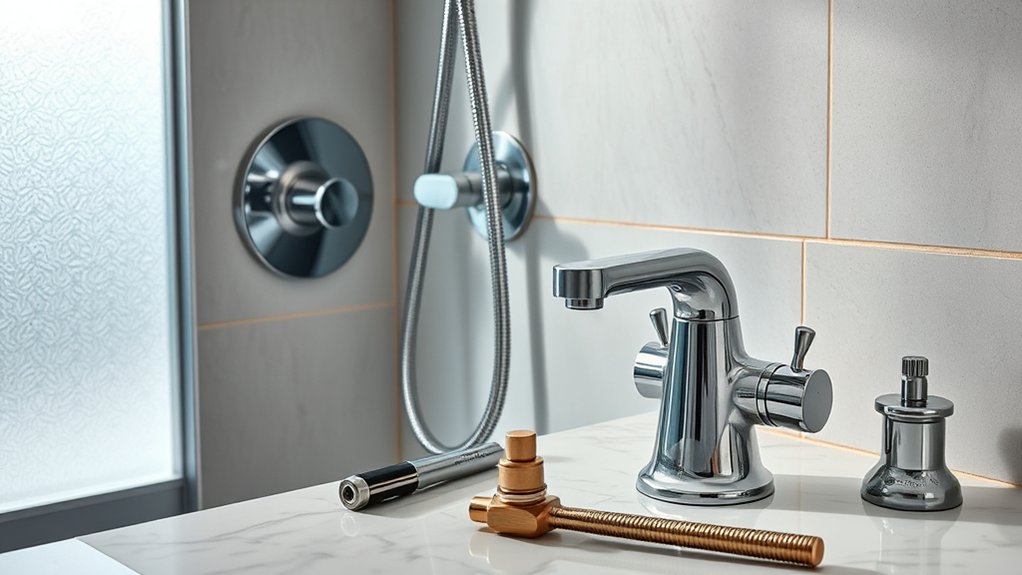
Different faucets, such as single-handle, double-handle, or pull-out sprayers, may require varied installation methods and plumbing compatibility. Understanding these technical details guarantees you don’t violate your lease or cause damage.
Different faucet types demand specific installation methods and plumbing compatibility to avoid damage and lease violations.
If your lease restricts changes, unauthorized replacement could lead to penalties or repair costs. Even if allowed, you should confirm whether you must restore the original faucet upon moving out.
Reviewing your rental agreement carefully and identifying the faucet types compatible with your plumbing system will help you make informed decisions and avoid costly mistakes during the replacement process.
How to Get Your Landlord’s Permission to Change a Faucet
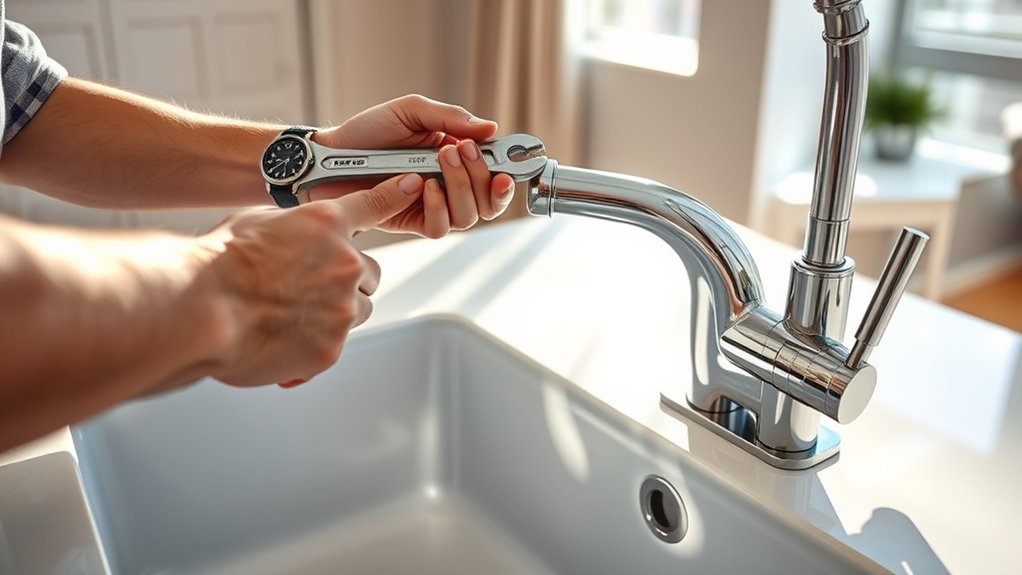
How do you secure your landlord’s permission to change a faucet? Start by reviewing your lease to understand tenant rights related to modifications.
Next, draft a formal written request detailing the specific faucet options you intend to install, emphasizing any improvements in functionality or efficiency. Include technical specifications to demonstrate compatibility with existing plumbing.
Highlight your plan to restore the original faucet upon lease termination if required. Submit this proposal to your landlord, offering to cover costs or handle professional installation to minimize risk.
Keep communication clear and professional, and request written approval before proceeding. This approach respects landlord authority, protects your tenant rights, and guarantees both parties agree on acceptable faucet options and installation terms.
Tools and Materials Needed to Change an Apartment Faucet
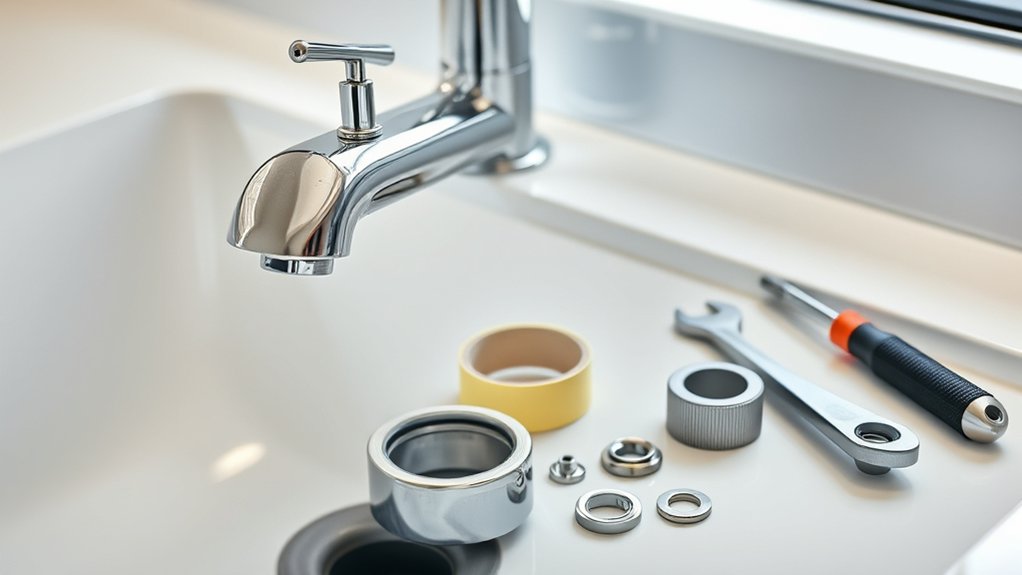
Changing an apartment faucet requires a specific set of tools and materials to guarantee a smooth installation. First, identify the faucet types compatible with your sink to confirm you select the correct replacement.
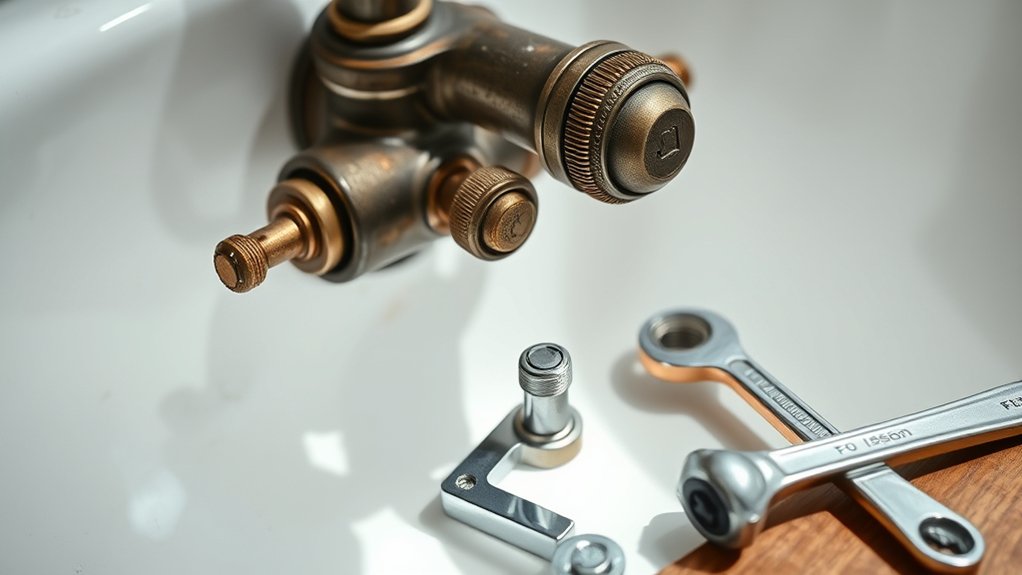
Essential tools include an adjustable wrench, basin wrench, screwdriver set, plumber’s tape, and a bucket to catch water during removal. You’ll also need replacement supply lines if the existing ones show wear.
For installation tips, have a flashlight handy to inspect tight spaces under the sink. Use plumber’s tape on threaded connections to prevent leaks. A putty knife can help remove old sealant cleanly.
Gathering these tools and materials beforehand streamlines the process, reducing the risk of errors and confirming a professional-quality faucet replacement in your apartment.
How to Change a Faucet Without Damaging Your Apartment
When you replace a faucet in your apartment, you must take care to protect the surrounding surfaces and plumbing fixtures. Start by shutting off the water supply and placing a bucket underneath to catch any residual water. Use painter’s tape around the sink edges to prevent scratches during removal.
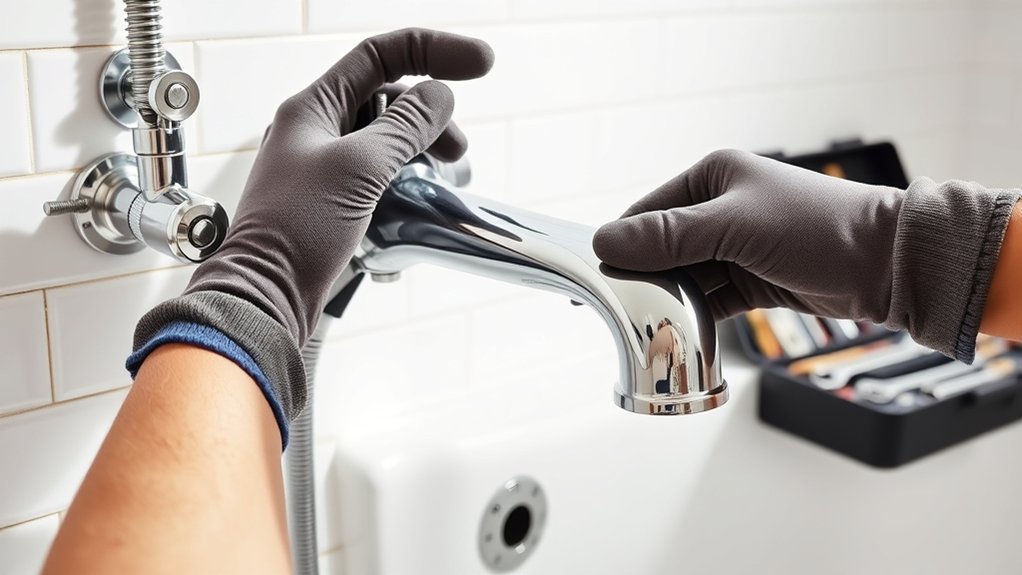
Carefully disconnect supply lines with an adjustable wrench, avoiding excessive force that might damage apartment plumbing. Remove the old faucet by loosening mounting nuts from beneath the sink, supporting the faucet to prevent falls.
When installing the new faucet, follow manufacturer faucet installation tips precisely, ensuring washers and gaskets are properly seated to avoid leaks. Tighten connections securely but don’t overtighten, which can crack fittings.
Finally, check for leaks before restoring water pressure to address any apartment plumbing concerns immediately.
Frequently Asked Questions
What Types of Faucets Are Best for Apartment Bathrooms?
You’ll find modern faucet styles like single-handle or wall-mounted faucets best for apartment bathrooms, offering sleek looks and easy use. Choose budget friendly options with durable materials, ensuring long-lasting performance and minimal maintenance.
Can I Upgrade to a Water-Saving Faucet in My Apartment?
You can definitely upgrade to a water-saving faucet, turning your bathroom into an eco-friendly oasis. Focus on water-saving benefits, guarantee compatibility with existing plumbing, and follow precise installation tips for a seamless, efficient upgrade experience.
How Do I Handle Faucet Repairs if I Can’T Replace It?
You should follow faucet maintenance tips like regularly cleaning aerators and checking seals. Use temporary fixes such as plumber’s tape or sealants for leaks. Then promptly contact your landlord or a professional plumber for permanent repairs.
Will Changing the Faucet Affect My Apartment’s Water Pressure?
Changing the faucet can affect your apartment’s water pressure, especially if the new faucet has different flow rates or aerators. Guarantee proper faucet installation to maintain consistent water pressure and avoid leaks or performance issues.
Are There Any Legal Restrictions on Faucet Styles in Rentals?
You might face faucet regulations in rental agreements restricting styles or modifications. Always review your lease terms carefully and consult your landlord before installing a new faucet to guarantee compliance with legal and property standards.
Conclusion
Changing your apartment faucet is doable with your landlord’s approval, just like assembling a puzzle where each piece must fit perfectly. Get permission first to avoid issues, gather the right tools, and follow steps carefully to prevent damage.
By working methodically and respecting your rental agreement, you’ll update your faucet efficiently and safely. This approach ensures a smooth process that protects both your apartment and your security deposit.
Ultimately, you can change the faucet in your apartment, provided you communicate clearly and follow the proper procedures.

Leave a Reply