
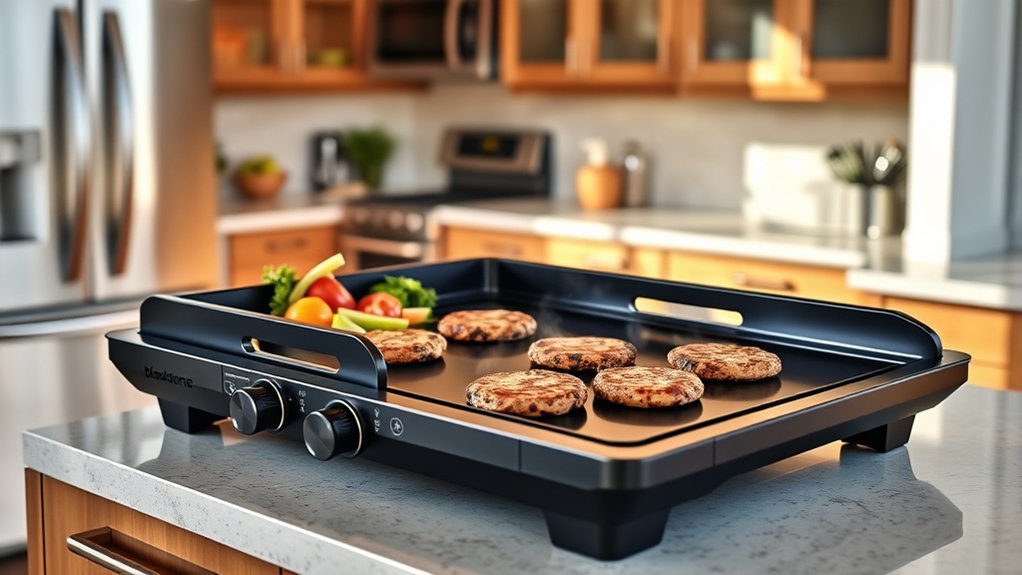
You can use a Blackstone tabletop griddle indoors only if you take strict safety precautions.
Always guarantee proper ventilation by opening windows or using exhaust fans to prevent dangerous carbon monoxide buildup.
Place the griddle on a stable, heat-resistant surface away from flammable materials, and never leave it unattended.
Keep a carbon monoxide detector and fire extinguisher nearby to manage risks effectively.
If you want to use your griddle safely inside, it’s important to understand key hazards and best practices.
Key Takeaways
- You can use a Blackstone tabletop griddle indoors only with proper ventilation to prevent carbon monoxide buildup.
- Operate the griddle near open windows or exhaust fans to ensure adequate airflow and reduce toxic gas risks.
- Place the griddle on a stable, heat-resistant surface away from flammable materials to minimize fire hazards.
- Keep a carbon monoxide detector and fire extinguisher nearby when using the griddle inside for safety precautions.
- Avoid using the griddle in small, enclosed, or carpeted rooms to reduce fire and poisoning risks.
Is It Safe to Use a Blackstone Tabletop Griddle Indoors?
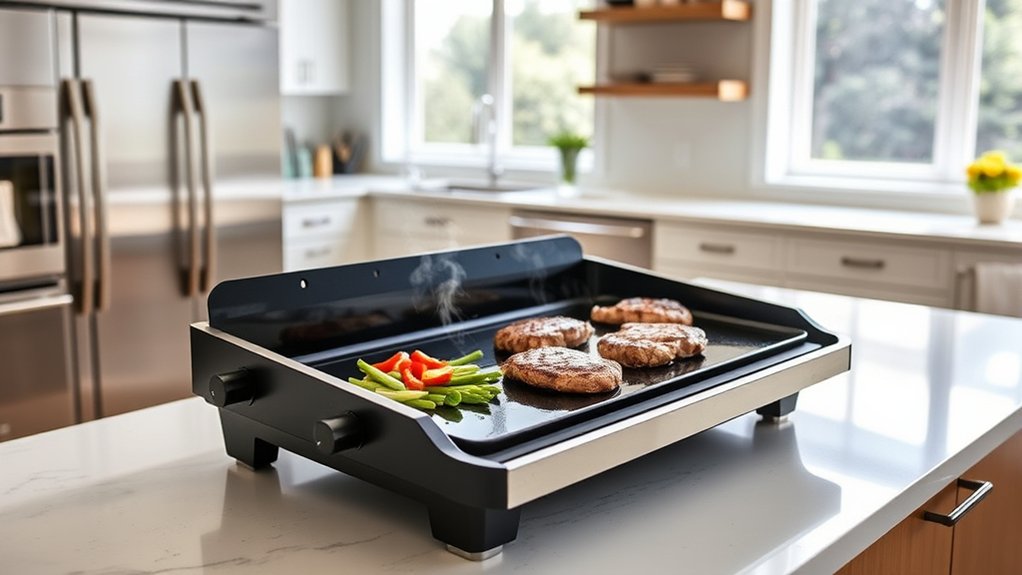
When considering whether you can safely use a Blackstone tabletop griddle indoors, ventilation and carbon monoxide risks are your top concerns. These griddles burn propane, producing carbon monoxide, a colorless, odorless gas that can be deadly in enclosed spaces.
For safe indoor cooking, you must guarantee exceptional ventilation, ideally a commercial-grade exhaust system or open windows and doors. Never use the griddle in small, unventilated rooms.
Griddle safety also requires placing the unit on a stable, heat-resistant surface away from flammable materials. Keep a carbon monoxide detector nearby as an essential safety measure.
While the Blackstone griddle is highly efficient outdoors, using it inside demands careful attention to prevent hazardous gas buildup and fire risks. Prioritize these precautions to maintain a safe indoor cooking environment.
Best and Worst Indoor Spaces for Blackstone Griddles
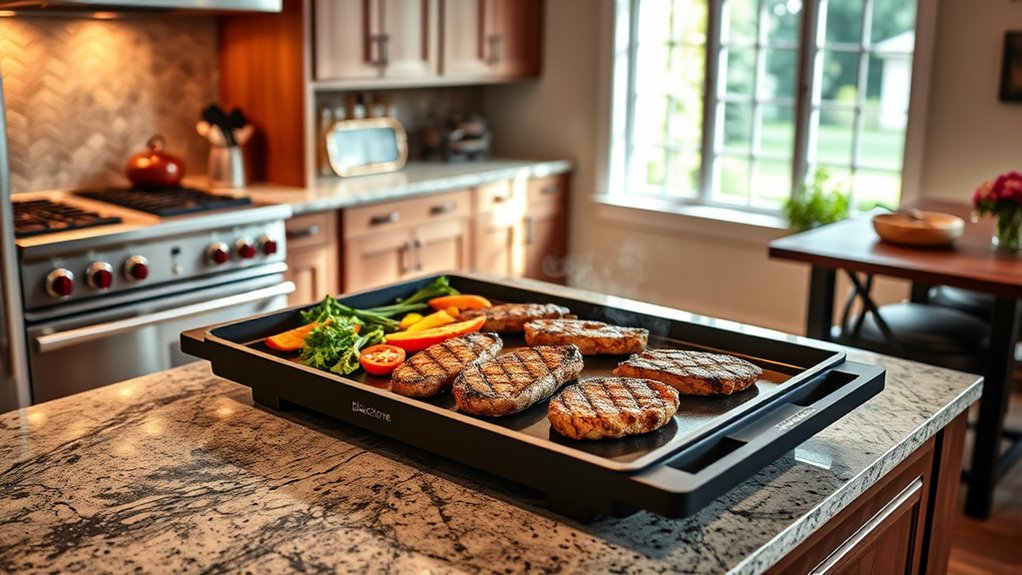
Understanding which indoor spaces suit a Blackstone tabletop griddle helps you manage ventilation and safety more effectively. Your kitchen layout plays an essential role in containing cooking odors and heat. Choose spaces with ample room around the griddle to prevent fire hazards and allow easy access to exits. Avoid confined areas that trap fumes or block airflow.
Best spaces include:
- Open-concept kitchens with exhaust fans
- Well-ventilated garages
- Spacious basements with windows
- Areas near operable windows or doors
- Rooms with hard, non-flammable surfaces
Worst spaces to avoid:
- Small, enclosed pantries
- Rooms without ventilation systems
- Carpeted or fabric-heavy rooms
- Areas cluttered with flammable materials
- Spaces adjacent to smoke detectors (to prevent nuisance alarms)
Selecting the right space guarantees safer operation and minimizes lingering cooking odors indoors.
Ventilation and Carbon Monoxide Risks Indoors
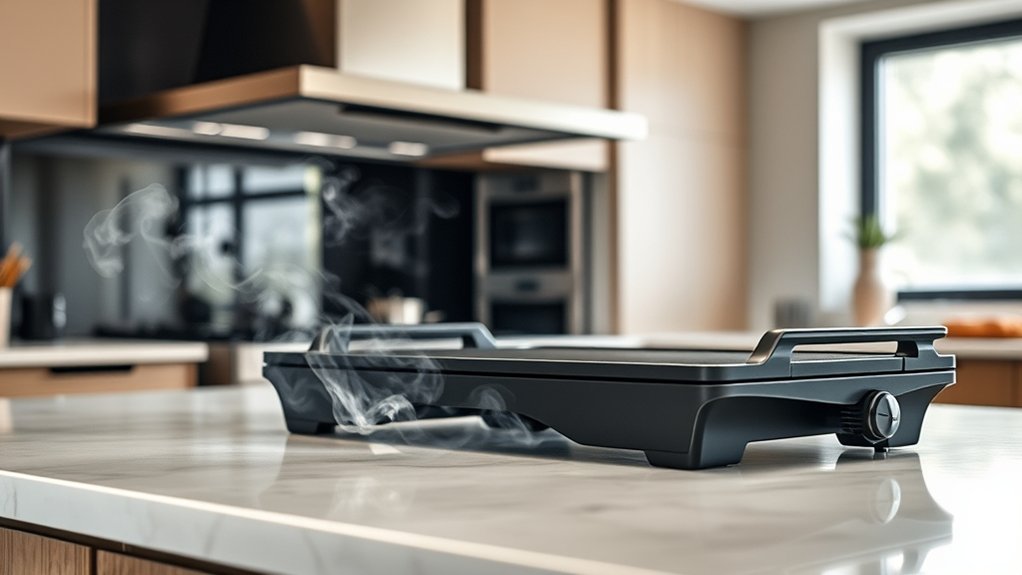
Because Blackstone tabletop griddles burn propane or natural gas, you must validate proper ventilation to prevent dangerous carbon monoxide buildup indoors. Carbon monoxide is a colorless, odorless gas that can quickly reach toxic levels without sufficient air exchange.
To maintain safe indoor ventilation, you need to operate the griddle near an open window or door and use exhaust fans if available. Avoid confined spaces with limited airflow, as stagnant air increases carbon monoxide concentration.
Installing a carbon monoxide detector in the cooking area is a critical safety measure, alerting you to dangerous gas levels before symptoms occur. Always prioritize fresh air circulation when using your Blackstone griddle indoors to minimize health risks associated with carbon monoxide exposure and validate a safe cooking environment.
Fire Hazards When Using Your Blackstone Indoors
Although Blackstone tabletop griddles offer convenient indoor cooking, they pose significant fire hazards that demand careful attention. When you use your griddle inside, fire safety becomes critical to prevent accidents. Key risks include:
Blackstone tabletop griddles provide indoor convenience but require strict fire safety to avoid serious hazards.
Accumulation of grease causing flare-ups
Proximity to flammable materials like curtains or paper
Overheating of the griddle or gas connections
Unattended cooking increasing fire chances
Inadequate space for heat dissipation
Each factor increases the likelihood of fire during indoor cooking. You must recognize these hazards to mitigate risks effectively. Proper fire safety protocols and constant vigilance are crucial when operating your Blackstone griddle indoors to avoid dangerous situations and guarantee a safe cooking environment.
Smart Tips for Safe Indoor Use of Your Blackstone Griddle
To minimize fire hazards when using your Blackstone griddle indoors, you need to apply specific safety measures that control risks effectively. Start by ensuring proper ventilation to dissipate smoke and gas buildup.
Perform regular griddle maintenance, including cleaning grease traps and inspecting gas connections to prevent flare-ups. Use cooking techniques that avoid excessive oil and high flames, which can ignite fires.
Position your griddle on a stable, heat-resistant surface away from flammable materials. Keep a fire extinguisher nearby and never leave the griddle unattended while in use.
Always follow manufacturer guidelines for indoor use and gas pressure settings. By combining disciplined griddle maintenance with controlled cooking techniques, you’ll create a safer environment for indoor Blackstone griddle operation.
Frequently Asked Questions
How Do You Clean a Blackstone Tabletop Griddle After Indoor Use?
You clean your Blackstone tabletop griddle after indoor use by letting it cool, scraping off residue, wiping with a damp cloth, and applying a thin oil layer.
Prioritize griddle cleaning and indoor maintenance to guarantee safety and performance.
What Types of Fuel Are Compatible With a Blackstone Tabletop Griddle?
You’ll find Blackstone tabletop griddles primarily use propane compatibility for reliable heat. While electric options exist, they’re less common.
Always check your model’s specifications to verify safe, proper fuel use and avoid hazards.
Can You Cook Specific Foods Like Pancakes or Bacon on a Blackstone Griddle?
Like a painter perfects strokes, you’ll master pancake techniques on your Blackstone, while the bacon sizzle guarantees crisp safety. Keep heat moderate, use proper utensils, and enjoy precise, safe cooking every time on your griddle.
How Long Does It Take for a Blackstone Griddle to Preheat?
You’ll need about 5 to 10 minutes of preheating time on medium to high temperature settings.
Always monitor the griddle to avoid overheating, ensuring safe and even cooking temperatures before you start grilling.
Are There Any Accessories Recommended for Indoor Blackstone Griddle Cooking?
You should use griddle accessories like a splatter guard, heat-resistant gloves, and an exhaust fan for indoor cooking. These enhance safety and control smoke, ensuring your Blackstone griddle operates efficiently without compromising indoor air quality.
Conclusion
While your Blackstone tabletop griddle offers fantastic cooking versatility, using it indoors poses serious risks like carbon monoxide buildup and fire hazards. On one hand, it promises convenience and great meals; on the other, it demands strict ventilation and constant vigilance.
If you choose to grill inside, prioritize safety by ensuring proper airflow and never leaving it unattended. Balancing convenience with caution is key to enjoying your griddle without compromising your safety.
In conclusion, while the Blackstone tabletop griddle is a great cooking tool, using it indoors requires careful safety measures to prevent hazards.

Leave a Reply